







Sourcing from China remains one of the most cost-effective ways for global importers to build scalable supply chains. However, it also comes with real challenges such as unreliable suppliers, quality issues, shipping delays, and compliance risks.
Many buyers still struggle because they rely on random supplier searches instead of structured sourcing processes or verified China sourcing networks.
This guide will show you how to overcome the most common sourcing problems using real industry experience from supplier selection, quality control, shipping management, and product development in China.
Key Takeaways
- Sourcing from China is still highly cost-efficient, but risks come from weak supplier control
- Most sourcing failures happen due to poor verification and lack of quality control systems
- Shipping delays and mismanaged timelines are major hidden cost drivers
- A structured sourcing network is more effective than finding individual suppliers
- Professional sourcing systems significantly reduce risk in China procurement
Why China Still Dominates Global Sourcing in 2026
Strong manufacturing capabilities
China has strong china manufacturing capabilities across almost every product category. From electronics to daily consumer goods, factories can produce large volumes with stable quality.
Many industrial zones are highly specialized. For example, one region may focus on textiles, while another focuses on hardware or electronics. This structure helps reduce production time and improves efficiency.
Complete supply chain system
Raw materials, parts, tooling, assembly, and packaging are often located in the same region.
This makes production faster and more stable. It also lowers logistics costs inside China, which supports competitive pricing for global buyers.
Scale and cost efficiency
China can produce at a very large scale.
Even when labor costs rise, efficiency from scale keeps total costs competitive compared to many other sourcing countries.
Strong sourcing ecosystem
Buyers can easily build a china sourcing network with factories, trading companies, and sourcing agents.
This ecosystem helps importers:
- Find suppliers faster
- Compare multiple factories
- Reduce sourcing risks
- Improve communication and execution
Better product development ability
China is not only a production base. It is also a strong product development hub.
Factories support OEM and ODM projects, which helps buyers customize products and improve competitiveness.
Stable export infrastructure
China also has strong logistics and export systems. Ports, warehouses, and shipping routes are well developed.
This makes international trade more predictable and supports global delivery at scale.
The Hidden Complexity Behind Sourcing from China
Supplier visibility is often limited
Many suppliers online are not direct factories. Some are trading companies or middle agents.
This makes it hard for buyers to understand real production capacity. As a result, decisions are often based on price instead of real capability.
Product quality is not always consistent
Samples often look perfect, but mass production can be different.
This happens because production systems, materials, and labor conditions may change during large orders.
Without proper control, buyers face unexpected differences between sample and final goods.
Communication gaps affect execution
Even when English is used, small misunderstandings in specifications can lead to wrong production outcomes.
For example:
- size tolerance not clearly defined
- material not specified in detail
- packaging instructions missing
These small gaps can lead to large losses later.
Production control is often weak
Many buyers do not track production in real time. They only check at the end of the process.
This creates risk. Problems are usually discovered too late, when correction is expensive or impossible.
A strong system is needed when working with reliable suppliers in China.
Logistics and timing are more complex than expected
Delays can happen at many stages:
- raw material shortage
- production slowdown
- inspection delay
- booking space for shipping
Hidden cost structure is not obvious
Many buyers only focus on unit price. But real cost includes:
- inspection cost
- shipping variation
- rework or defect cost
- communication delays
These hidden costs often make cheap suppliers more expensive in practice.
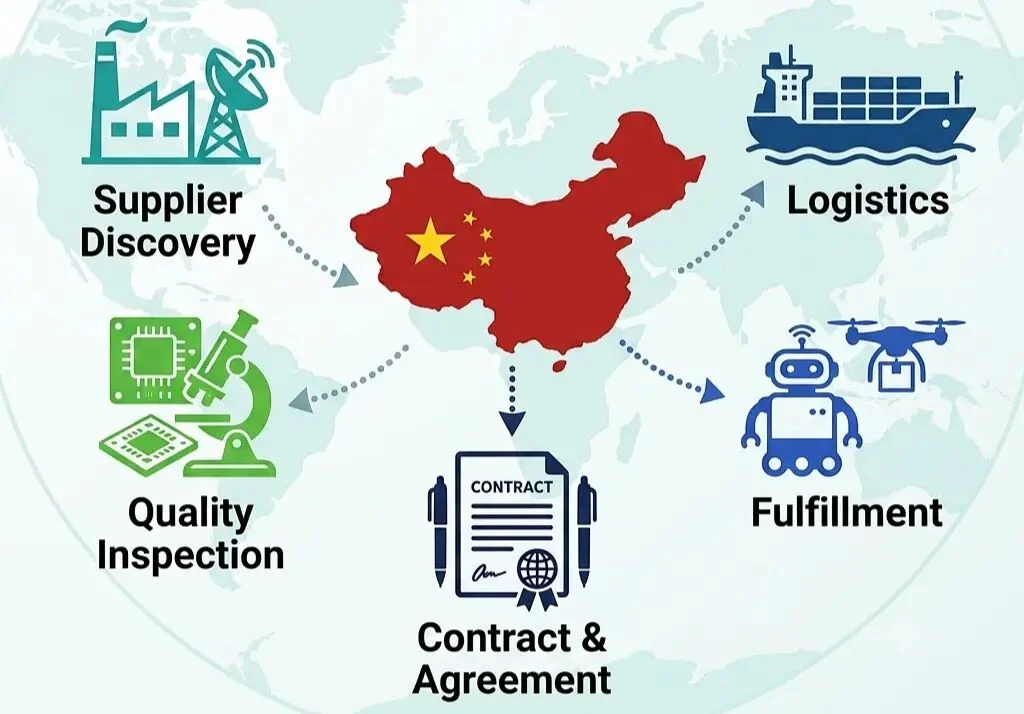
As you can see, sourcing from China is not a single task. It involves supplier selection, quality control, logistics, compliance, and product development.
If you’re facing one specific challenge, the guides below provide more detailed explanations and real-world sourcing examples. You can explore them first or continue reading this complete guide.
| Challenge | What You’ll Learn |
| Choosing the right sourcing partner | Learn from a real buyer’s experience of switching sourcing agents and discover the key signs that indicate it’s time to find a better partner. |
| Planning the best shipping schedule | Find out how to choose the right shipping time, reduce freight costs, and avoid delays through smarter logistics planning. |
| Handling failed pre-shipment inspections | See how quality problems were identified and resolved before shipment, preventing costly defects from reaching the customer. |
| Managing sourcing with one coordinated system | Discover how an integrated procurement process simplifies supplier management, quality control, and logistics. |
| Finding suppliers that meet compliance requirements | Explore a real sourcing case that shows how buyers identified qualified manufacturers and met international compliance standards. |
| Turning product ideas into mass production | Learn how product design was refined and managed through every stage, from concept to successful manufacturing. |
Supplier Reliability Challenges (and Why They Happen)
Many importers think they are working directly with factories, but in reality, the supplier structure is often more complex.
Many factories are actually trading companies
In many cases, suppliers present themselves as factories but actually act as intermediaries. These trading companies buy from multiple factories and resell to buyers.
This creates several risks:
- Limited control over production
- Less transparency in cost structure
- Slower response when issues happen
This is why building a china sourcing network requires careful supplier classification, not just supplier selection.
Supplier information is often incomplete or misleading
Many suppliers provide:
- polished product photos
- sample-quality products only
- limited production proof
However, this does not always reflect real mass production capability.
Lack of real factory verification
In many cases, buyers do not check:
- business license details
- production line access
- real factory location
- manufacturing scope
Pricing differences can hide supplier risk
Unusually low prices are another warning sign.
Some suppliers quote very low prices to attract buyers. However, this often means:
- lower material quality
- outsourcing production
- hidden cost adjustments later
Why these problems happen in China sourcing
Supplier reliability issues usually come from three root causes:
- Lack of direct factory access
- Weak verification systems from buyers
- High number of intermediaries in the supply chain
This structure makes sourcing from China efficient, but also complex.
How to Build a Reliable China Sourcing Network
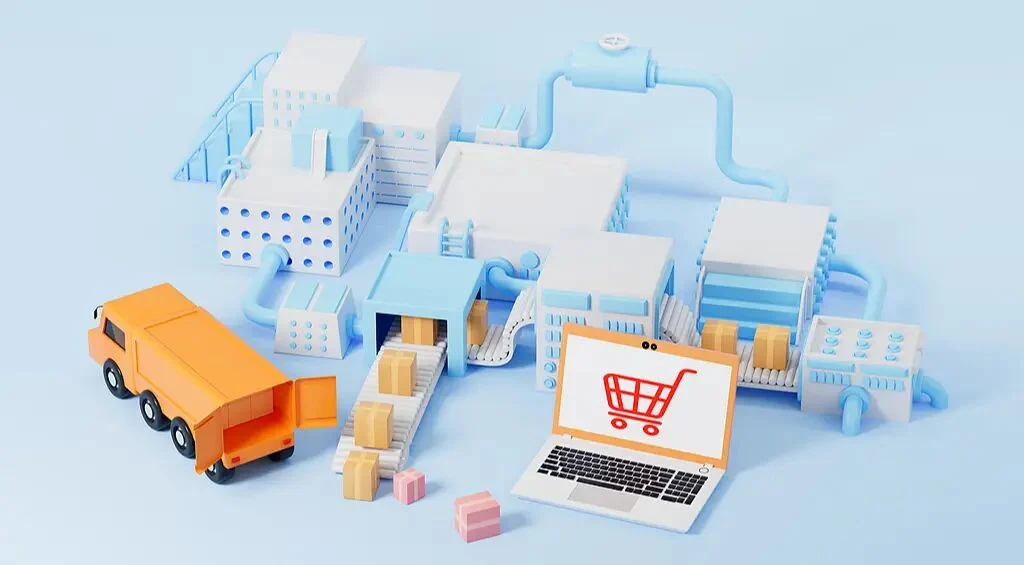
Instead of relying on a single supplier, professional importers build a network of verified factories, agents, and service providers.
Start with multiple verified suppliers
Buyers should contact several potential suppliers for the same product. This helps compare:
- pricing
- production capacity
- communication quality
- sample consistency
Verify production capability early
Key checks include:
- factory size and equipment
- product specialization
- sample consistency
- production capacity per month
Build relationships in different regions
China has strong industrial clusters. Each region focuses on different products.
A good sourcing network covers multiple regions. This improves flexibility and reduces dependency on one area.
Use a sourcing agent as a network bridge
In sourcing from China, agents help:
- identify verified factories
- compare multiple suppliers
- manage communication
- reduce sourcing risk
This is especially useful for buyers who are new or managing complex product lines.
Standardize your sourcing process
Professional buyers always standardize:
- product specifications
- sampling rules
- inspection requirements
- shipping conditions
Maintain backup suppliers
A strong network always includes backup options.
If one supplier fails to deliver, another can replace them quickly.
Quality Control Risks in China Manufacturing
Sample quality is not equal to mass production quality
A sample is often made carefully by skilled workers. However, mass production uses different materials, workers, and time pressure.
Hidden defects appear in large production runs
Some defects are not visible in early samples, such as:
- internal structure issues
- weak assembly points
- inconsistent stitching or coating
Lack of structured inspection creates risk
Without proper inspection stages:
- defects are found too late
- correction cost increases
- shipment may be delayed
Pre-shipment inspection is often the last control point, but not the only one needed.
AQL sampling does not guarantee zero defects
Quality inspection in sourcing from China usually follows AQL standards.
AQL does not mean zero defects. It means the sample is statistically acceptable within a defined range.
This means:
- small defects may still exist in shipped goods
- inspection only reduces risk, not removes it completely
- tighter standards cost more but improve accuracy
Production pressure affects quality stability
When production is rushed:
- workers skip small steps
- packaging errors increase
- inspection time is reduced internally
This is a common hidden risk in china manufacturing capabilities during peak seasons.
Shipping & Import Challenges When Buying from China
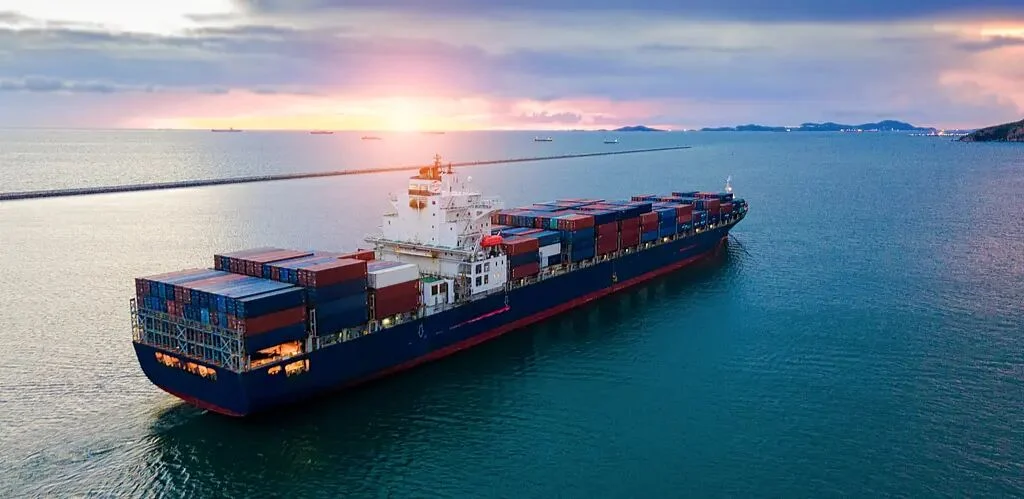
Hidden costs appear after production
Extra costs may include:
- local trucking fees
- port handling charges
- customs documentation fees
- storage fees if delays happen
As a result, the final landed cost is higher than expected.
Customs clearance can create delays
Even when goods are ready, shipment can be delayed due to:
- missing documents
- incorrect HS codes
- inspection requests
- policy changes in destination countries
Timing issues affect full supply chain
Shipping delays are often not caused by transport itself. They usually start earlier in the supply chain.
Common causes include:
- delayed production
- late quality inspection
- missed booking schedules
EXW vs FOB vs CIF confusion increases risk
- EXW: buyer handles almost everything
- FOB: supplier delivers to port
- CIF: supplier includes freight but limited control for buyer
According to shipping practice in China trade, FOB is often preferred because it balances cost and control for most importers.
Freight fluctuations add uncertainty
Shipping cost can change due to:
- seasonal demand
- port congestion
- global fuel prices
- space availability
One-Stop China Procurement Systems
A one-stop China procurement system means managing the entire sourcing process under one coordinated structure. It connects supplier sourcing, production, quality control, and shipping into a single workflow.
What one-stop procurement really means
It covers the full chain:
- product sourcing
- supplier selection
- price negotiation
- sample management
- production follow-up
- quality inspection
- logistics coordination
Why fragmented sourcing creates problems
Without a unified system, buyers often deal with multiple suppliers and service providers separately.
This leads to:
- repeated communication
- inconsistent information
- delayed decision-making
- lack of process visibility
Centralized control improves efficiency
Instead of tracking many suppliers, buyers work with one coordination point.
This improves:
- communication speed
- decision clarity
- process tracking
- issue resolution
Better coordination between sourcing stages
- sourcing decisions consider production capability
- quality control is aligned with specifications
- shipping is planned based on production progress
Risk reduction through full visibility
Buyers can track:
- supplier performance
- production status
- inspection results
- shipping timeline
Why one-stop systems are growing in China sourcing
More buyers now prefer integrated procurement models because global supply chains are more complex.
Factors driving this shift include:
- higher product customization
- stricter quality requirements
- faster delivery expectations
- multi-supplier coordination challenges
Compliance Risks in China Sourcing
Certification requirements vary by product
Some products require mandatory certifications before export or import. For example, China uses systems like CCC (China Compulsory Certification) for certain product categories. These rules apply to both domestic and imported goods.
Customs clearance rules are complex
Each shipment must match correct documentation, including:
- commercial invoice
- packing list
- HS code classification
Export control rules are becoming stricter
Authorities now monitor:
- product type
- end-user destination
- supply chain structure
If a product falls under controlled categories, export licenses may be required.
This affects reliable suppliers in China, especially in electronics, dual-use goods, and industrial components.
Supplier certification claims are not always accurate
Some suppliers may claim compliance with ISO or other standards without proper verification.
To reduce risk, buyers should always verify:
- certification validity
- issuing authority
- factory audit records
Forced labor and ethical compliance risks
Global supply chains now face stronger scrutiny on labor practices.
Importing goods linked to non-compliant labor sources can lead to shipment detention or reputational damage.
Changing regulations increase uncertainty
Compliance rules are not static. They change based on trade policy and international relations.
Recent updates in supply chain regulation show increased government control and stricter enforcement across borders.
Product Design & Manufacturing Control
OEM vs ODM defines your control level
- OEM (Original Equipment Manufacturing) means the buyer provides full design and specifications
- ODM (Original Design Manufacturing) means the supplier provides the base design and the buyer adapts it
OEM gives stronger control over china manufacturing capabilities, while ODM is faster but less flexible.
In ODM models, suppliers may reuse designs for other buyers. This can reduce product uniqueness and increase competition risk .
Design control prevents production deviation
If product specifications are unclear, factories will make their own assumptions.
Clear design files reduce these risks and improve production accuracy.
Factory-first thinking creates hidden risk
Many buyers assume factories can handle full product development. In reality, factories focus on production, not innovation.
This means:
- weak design input leads to weak output
- unclear instructions increase defect risk
- verbal communication creates errors
Strong documentation is required before production starts.
IP protection is part of manufacturing control
In china sourcing network systems, design files, molds, and technical drawings must be protected. In OEM projects, buyers usually retain ownership of product design, while ODM models often keep ownership with suppliers.
To reduce risk:
- use written contracts
- define ownership clearly
- limit early design exposure
DFM improves production success rate
Design for Manufacturing (DFM) is a key step in china manufacturing capabilities planning.
It means adjusting product design based on factory production ability.
Good DFM helps:
- reduce production errors
- simplify assembly
- lower defect rate
- stabilize mass production quality
Prototype testing is essential before mass production
A product should go through multiple sample stages before full production.
How to Import from China Step-by-Step
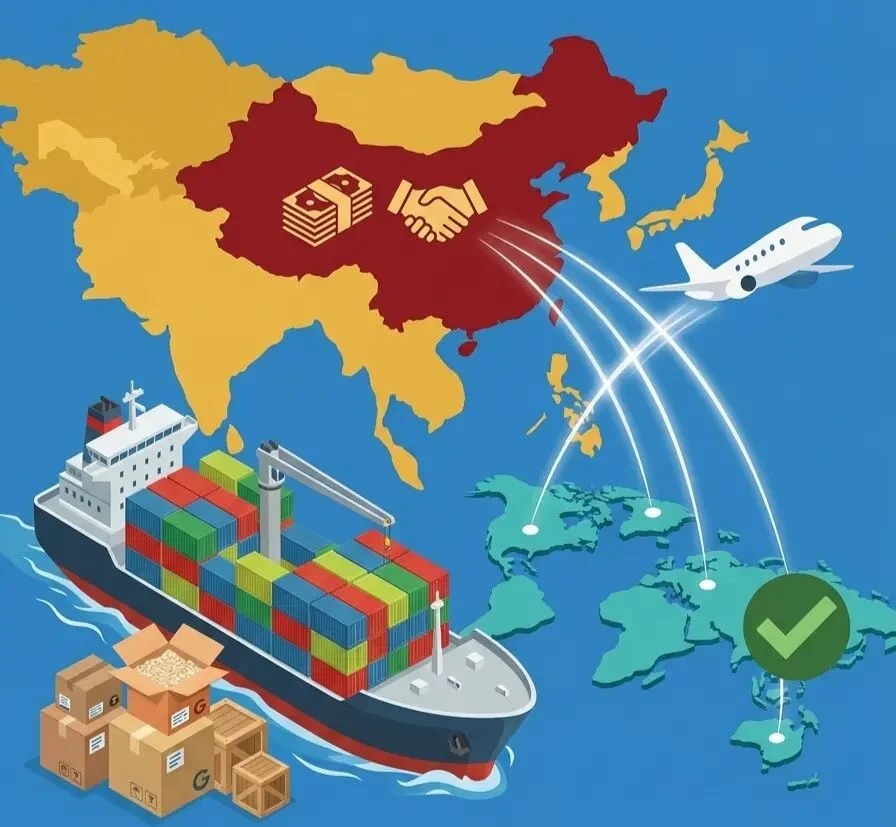
Step 1: Define your product clearly
product size and material
color and packaging
quality level
target price range
Step 2: Find and shortlist suppliers
In buying wholesale from China, it is important to contact multiple suppliers.
Compare suppliers based on:
pricing
communication speed
production experience
sample quality
Step 3: Request samples
Samples help you check:
material quality
product function
workmanship details
In many cases, samples look better than mass production. That is normal in reliable suppliers in China evaluation.
Never skip this step.
Step 4: Confirm order and negotiate terms
At this stage, confirm:
unit price
MOQ (minimum order quantity)
delivery time
payment terms
Step 5: Start production and monitor progress
Key checkpoints:
raw material preparation
assembly stage
packaging stage
Step 6: Quality inspection before shipment
Inspection checks:
product defects
packaging accuracy
quantity verification
Step 7: Arrange shipping and logistics
sea freight (lower cost, slower)
air freight (faster, higher cost)
Step 8: Customs clearance and delivery
Customs will check:
documents
product classification
declared value
After clearance, goods are delivered to your warehouse.
Future of China Manufacturing & Global Sourcing
The future of sourcing from China is shifting, but China remains a core part of global supply chains. In 2026, the focus is moving toward automation, speed, and supply chain stability.
Automation is reshaping production
Factories are using more:
- AI-driven machines
- robotic assembly lines
- smart inspection systems
This improves speed and reduces human error. It also increases consistency in mass production.
China is moving toward higher-value production
More factories now produce:
- advanced electronics
- EV components
- industrial equipment
- smart devices
Export growth is increasingly driven by high-tech goods and AI-related products.
This shows a shift from low-cost labor to technology-driven production.
Global supply chains are becoming more diversified
Many companies now use a china sourcing network combined with other countries. This is often called a multi-country strategy.
Supply chains are no longer single-location systems. They are distributed across regions to reduce risk and improve flexibility.
China is becoming a component hub
Instead of only exporting finished products, China now exports:
- parts
- components
- raw assemblies
This makes China a key upstream player in global manufacturing networks.
Supply chains are becoming more AI-driven
In reliable suppliers in China, digital systems are becoming standard.
Factories are adopting:
- real-time production tracking
- AI quality prediction
- automated planning tools
Risk management is becoming more important
Future sourcing is not only about efficiency. It is also about resilience.
Importers now focus on:
- supplier diversification
- compliance control
- logistics planning
- production visibility
This makes china sourcing network design more important than individual supplier choice.
FAQ: Sourcing from China and Overcoming Buyer Challenges
1. What is the biggest risk in sourcing from China?
The biggest risk is not production, but supplier verification.
Many issues come from unclear factory identity and weak checks in early stages of sourcing from China.
2. How can I find reliable suppliers in China?
Start with multiple suppliers and verify them carefully.
Check business licenses, factory location, and production ability before placing orders with reliable suppliers in China.
3. What is a China sourcing network?
A china sourcing network is a system of suppliers, factories, and agents working together.
It helps buyers compare options, reduce risk, and improve supply chain control.
4. What are common mistakes when importing from China?
Common mistakes include skipping samples, choosing suppliers only by price, and weak quality control.
Conclusion
In 2026, sourcing from China remains a key strategy for global importers. China still offers strong manufacturing capacity, stable supply chains, and flexible production options.
Modern how to import from China requires full process control. Buyers should manage suppliers, quality, logistics, and compliance in a structured way.
At the same time, risks are more visible than before. Issues like weak supplier verification, unclear product specs, and shipping delays can quickly increase total cost.
China is also evolving. With stronger automation and higher-value manufacturing, china manufacturing capabilities are improving in both speed and precision. This creates more opportunities for prepared importers.
If you are planning to scale your imports or reduce sourcing risks, you don’t have to manage everything alone.
👉 Sellers Union helps global buyers with supplier selection, quality control, and end-to-end sourcing from China.
Contact us today to build a safer and more efficient supply chain for your business.

Ivy is a Sourcing Specialist at Sellers Union. She shares hands-on experience in supplier selection, quality control, and market trends to help global wholesalers make informed decisions. Her goal is to simplify the sourcing process and help brands build efficient supply chains in the industry.