







Introducción
In the intricate dance of international trade, perfect shipments are the goal, but how you handle an imperfect situation defines your true character as a supplier. A smooth order is quickly forgotten; a crisis, when managed with integrity, becomes the cornerstone of an unbreakable partnership.
I want to share a frank and detailed case study from our own experience. This is the story of a 5,000-unit shipment of bamboo kitchen sets to a valued wholesaler in Mexico, the mould issue that threatened our relationship, and the transparent, decisive steps we took to turn disaster into a foundation of unshakable trust.
The Client and The Product: A Promising Partnership
Our client,is a wholesaler who been doing business with us for many years, supplying housewares to retailers across the country. They had placed a significant order for 5,000 sets of our bestselling 3-piece bamboo kitchen utensil set. The order was a milestone, marking them as a key partner in the Mexican market.
Bamboo is a fantastic material—durable, sustainable, and beautiful. However, as an organic material, it requires careful handling and specific conditions during production and transit to prevent moisture issues. We had robust quality control in place, or so we thought.
The Email That Sank Our Hearts: A Bamboo Shipment Crisis
One day,we received an email from the boss of our clients:”URGENT: Major Quality Issue with Bamboo Shipment.”
Attached were photos that made my heart sink. As her team unloaded the cartons, they found that a significant portion of the bamboo spoons, spatulas were speckled with patches of black mould. It wasn’t just a few sets; it was widespread enough to threaten the entire shipment’s viability.
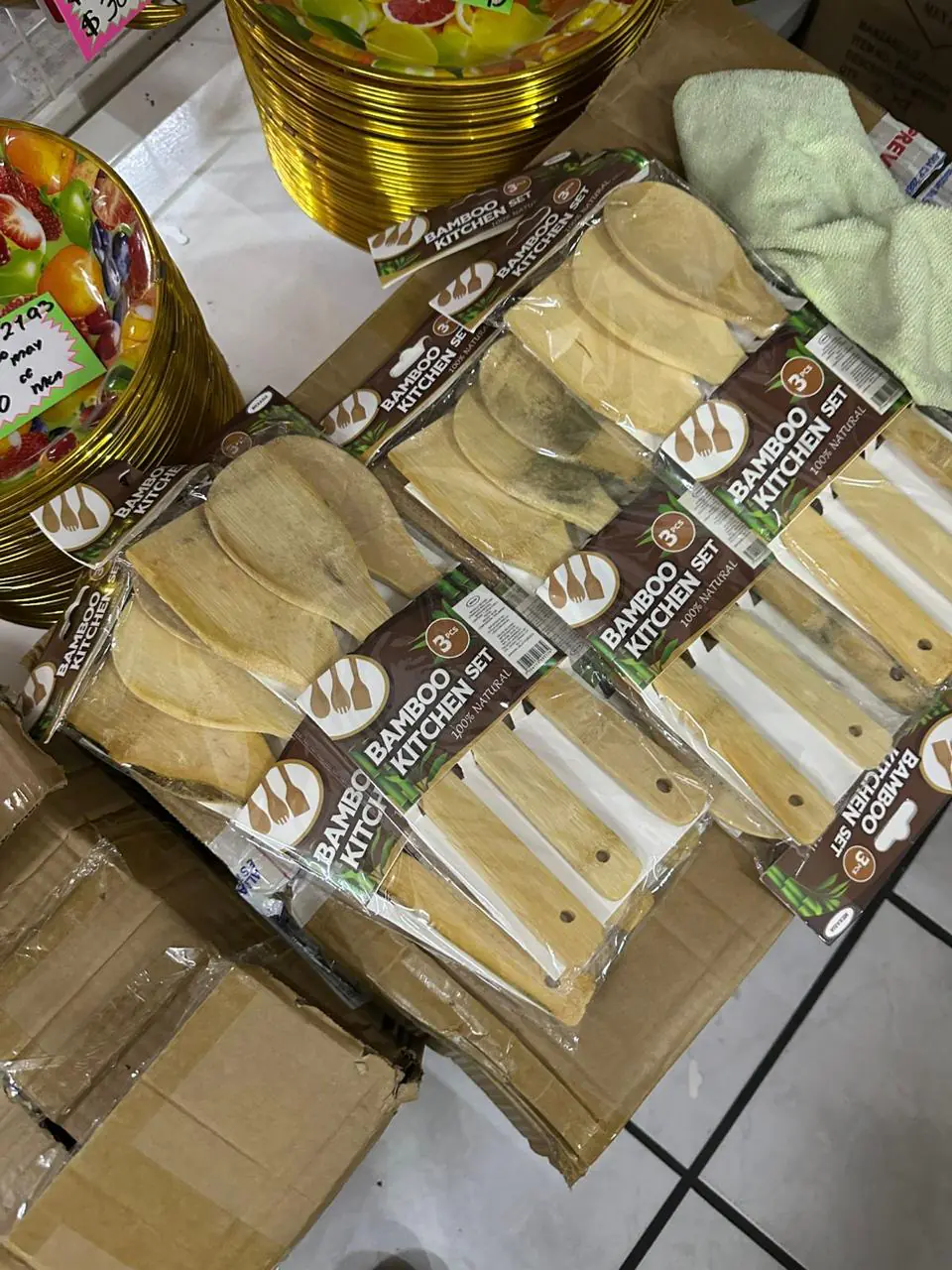
For a wholesaler, this is a nightmare. Their problems were immediate and severe:
Unsellable Inventory: Mouldy kitchen items are not just a cosmetic flaw; they are a health concern and completely unmerchantable.
Storage and Liability: They were now housing 5,000 mouldy sets, posing a potential risk to other inventory in their warehouse.
Reputational Damage: Their retail clients were expecting a new, eco-chic product line, not a contaminated one. Their credibility was on the line.
Financial Gridlock: They had invested a substantial amount of capital into this order, which was now literally rotting in their warehouse.
Our client wasn’t just angry; he was deeply concerned for her business. he needed a partner, not an excuse.
Our Response: A Three-Phase Action Plan
We knew that standard procedures wouldn’t suffice. This required a response that was swift, empathetic, and overwhelmingly decisive.
Phase 1: Immediate Triage and Ownership (The First 24 Hours)
Unconditional Apology and Ownership: Our first call with Client started with a clear message: “We are so sorry. This is our responsibility, and we will make it right.” We did not mention the shipping company’s potential role or humidity levels. We owned the problem entirely. This immediately shifted the conversation from “whose fault is it?” to “how do we solve it?”
Containment Instructions: We provided immediate, expert-guided advice. We recommended they segregate the mouldy sets and wear masks while handling them to prevent spore inhalation. We also authorized them, at our cost, to arrange for the safe disposal of the most severely affected units to protect their other stock.
The Replacement Promise: Without waiting for a full investigation, we committed to manufacturing and shipping a full, 5,000-set replacement order immediately. We absorbed the cost. This was the most powerful way to demonstrate our commitment to their business survival.
Phase 2: The Root Cause Investigation (A Collaborative Effort)
While the new production was being scheduled, we launched a thorough investigation. We involved Client every step of the way, treating her as part of the quality team.
We traced the problem back to a critical failure in our process:
The Drying Process: While our bamboo is kiln-dried, we discovered that an unusually humid monsoon period in our region had led to a higher moisture content in the bamboo before it entered our finishing stage.
The Packaging: This was the critical failure. We package the sets in sealed plastic bags for a pristine, retail-ready look. We realized that the combination of slightly higher moisture content in the bamboo and the airtight plastic packaging created a “terrarium effect” during the long, hot sea voyage. Trapped moisture with no way to escape condensed on the bamboo and caused the mould to bloom.
QA Blind Spot: Our quality checks were visual and happened just before bagging. They did not include moisture metering for every batch, especially when dealing with a supplier rush.
We presented this detailed analysis to our client with complete transparency, including photos from our own factory and the data from our moisture tests.
Phase 3: Building a Fortified, Long-Term Solution
Replacing the goods was step one. Ensuring it never happened again was how we would earn back her long-term trust. We co-developed a new “Bamboo Integrity Protocol”:
Mandatory Moisture Metering: Every single batch of bamboo raw material now must pass a rigorous moisture content check with a digital moisture meter before it can move to production. Any batch over the strict threshold is re-dried.
Breathable Packaging Revolution: We completely redesigned our packaging. We moved from sealed plastic bags to innovative, breathable cornstarch-based bags that allow air circulation, preventing moisture buildup, while still keeping the product clean. This was a more expensive solution, but it was non-negotiable.
Desiccant Integration: As an added layer of protection, we now include a silica gel desiccant packet in every single box to absorb any residual ambient moisture during transit.
The Outcome: A Stronger Partnership and a Better Product
The crisis was a painful but invaluable learning experience. The outcome, however, was profoundly positive.
Restored and Strengthened Trust: Client’s faith in us was not just restored; it was deepened. he said, “You didn’t just replace the order. You invested in a permanent solution for our supply chain. That makes you a true partner.”
Increased Business: our client has since doubled their order frequency and has become our flagship partner in Latin America. The reliability of our new process gave them the confidence to expand.
A Superior Product for All: The new breathable packaging and moisture testing have now been implemented for all our clients worldwide. The crisis led to a fundamental, company-wide upgrade that makes our product more resilient for every market.
Key Takeaways for Global Traders
The lesson from the mouldy bamboo is one every exporter should heed:
Own the Problem Immediately: Defensiveness destroys trust. Accountability builds it.
Protect Your Partner’s Business First: The financial hit of a replacement order is a short-term cost compared to the long-term value of a loyal partner.
Dig for the Root Cause, Not a Quick Fix: Don’t just treat the symptom. Find the underlying process failure and eradicate it.
Turn Your Solution into a Sales Feature: Our “Bamboo Integrity Protocol” is now a key part of our sales pitch, demonstrating our commitment to quality and proactive problem-solving.
In international trade, you are not just shipping products; you are building trust across oceans. And sometimes, that trust is built strongest when you prove you can clean up a mess you helped create.
Has your business ever faced a similar logistical or quality challenge? How did you handle it? Share your experiences in the comments below.