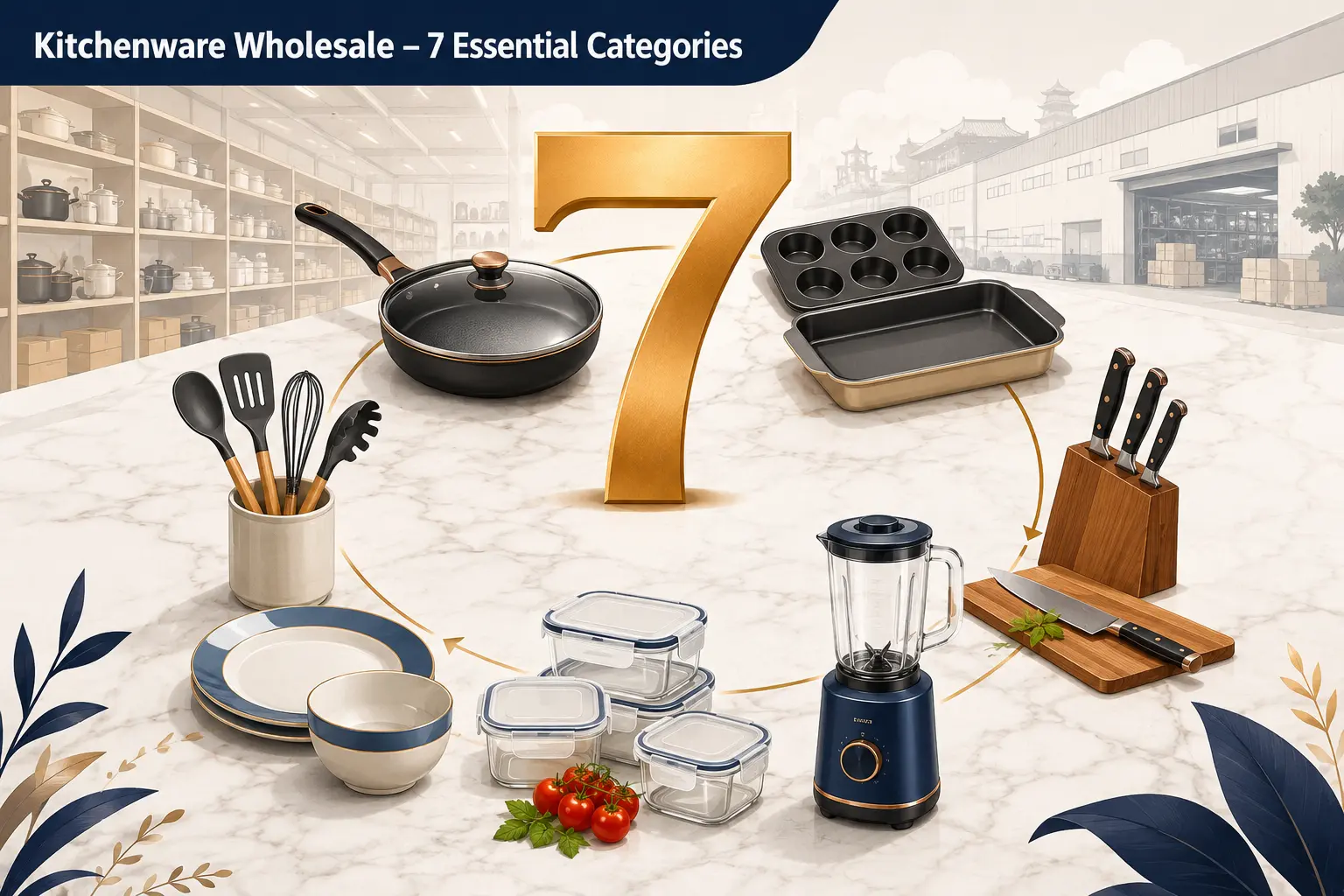






I’ve spent years sourcing and supplying naczynia kuchenne — everything from ceramic cookware to stainless steel kitchen utensils — and one question that comes up again and again, especially from people buying products online or importing for the first time, is: “What is a Certificate of Conformity, and do I actually need one?”
It’s a fair question. The term sounds very official and a little intimidating. But once you understand what it actually means, it’s pretty simple — and it directly affects whether the products you buy are safe, legal, and worth your money.
Whether you just received a product with a CoC attached, you’re trying to return or resell something, or you’re importing goods and customs is asking for paperwork, this guide has you covered.
What Is a Certificate of Conformity?
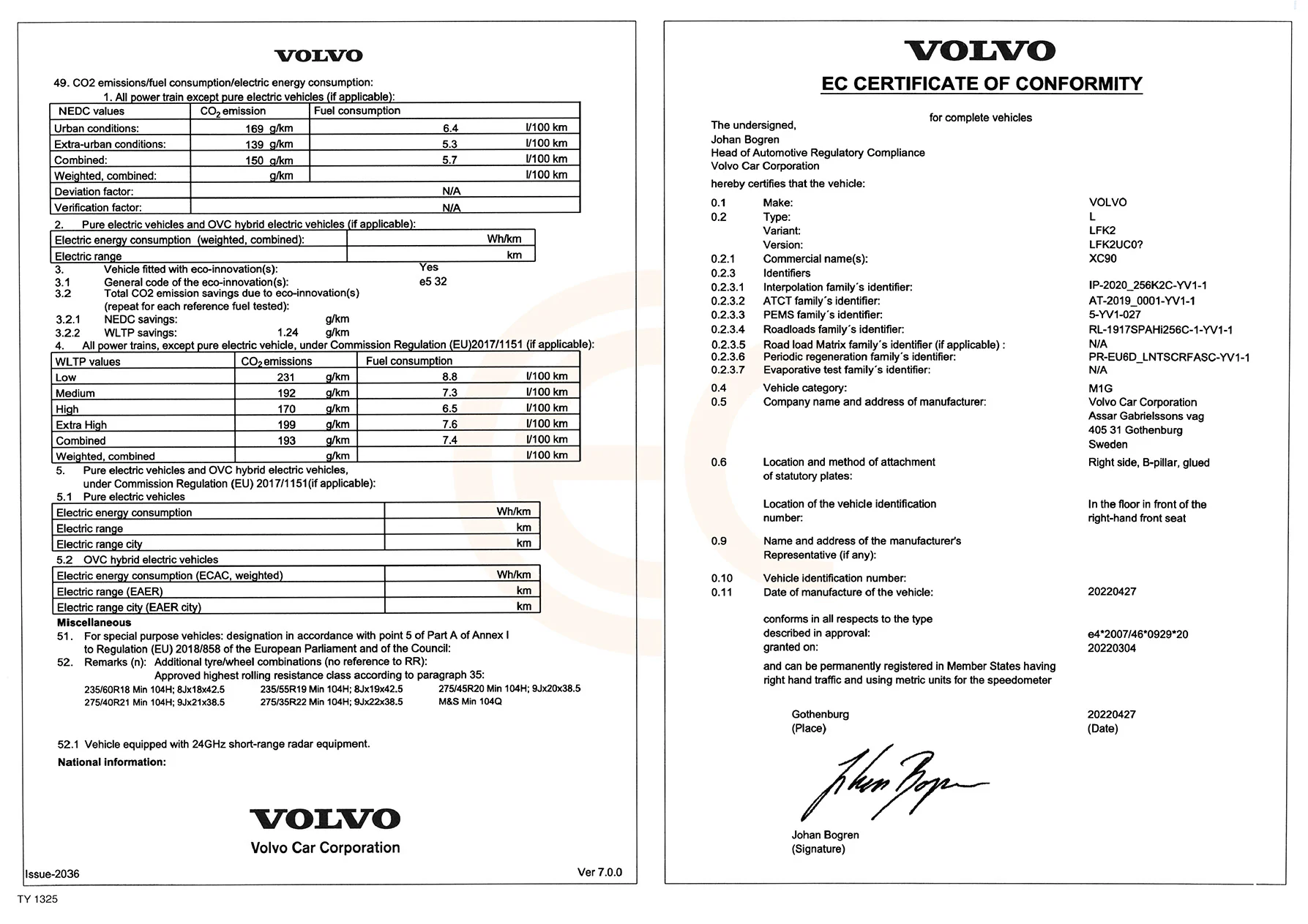
A Certificate of Conformity (CoC) is a document that confirms a product meets specific safety and quality standards. It’s basically the manufacturer or an official testing body saying: “We checked this product. It passed the required tests. It is safe and meets the rules.”
The CoC can be issued by:
- The manufacturer themselves (a self-declaration)
- An independent, accredited testing laboratory (like SGS, Intertek, or TÜV)
- A government-recognized certification body
You’ve probably seen CoC-related labels without realizing it. The Znak CE on electronics and kitchen appliances in Europe? That’s backed by a Declaration of Conformity. The UL listing on your toaster? Same idea. These marks exist because a CoC process happened behind the scenes.
It’s also sometimes called a Certificate of Conformance or Certificate of Compliance — these terms are often used interchangeably, though there are some differences (more on that below).
Why Does a Certificate of Conformity Matter to You?
Here’s why this document matters, even if you’re just a regular person buying or selling products:
If you’re buying products: A CoC means someone checked that the product meets safety standards before it reached you. This is especially important for things that touch your food or your body — like naczynia kuchenne, baby items, or personal care products. Without a valid CoC, you have no proof the product was tested at all.
If you’re importing products: Customs authorities in many countries will ask for a CoC before releasing your shipment. If you can’t provide one, your goods can be held, returned, or even destroyed. This applies to both large importers and individuals buying goods in bulk from overseas.
If you’re selling products online: Platforms like Amazon and eBay increasingly require proof of compliance for certain product categories. If a customer reports a safety issue, a CoC is part of your legal protection.
What Should a Certificate of Conformity Include?
A properly built CoC isn’t just a piece of paper with a logo on it. According to the U.S. Consumer Product Safety Commission (CPSC), a complete CoC should include:
- Product identification — A clear description of the product (model name, number, variant)
- The standards it was tested against — For example, 16 CFR Part 1632 for mattress flammability, or EN 1935/2004 for food-contact materials in Europe
- Manufacturer or importer information — Full name, address, and contact details
- Contact for test records — Who holds the actual test documentation, and how to reach them
- Date and place of manufacture — At minimum, the month, year, city, and country
- Date and place of testing — When and where compliance testing was performed
- Third-party lab details (if applicable) — Name, address, and accreditation info for any lab that performed testing
If a CoC you’ve received is missing several of these elements, it may not be valid — especially for customs or legal purposes.
How to Get a Certificate of Conformity: Step by Step
If you’re a manufacturer or a small business owner who needs to get a CoC for your products, here’s how the process generally works:
Step 1: Identify the Standards That Apply to Your Product
This depends on:
- What the product is (food contact item, electrical appliance, toy, etc.)
- Where it will be sold (USA, EU, UK, Australia, etc.)
Each country and product category has its own set of rules. A kitchen utensil being sold in Germany has different requirements than the same product sold in the United States.
Step 2: Have Your Product Tested
You can either:
- Test it yourself (self-declaration) — allowed for some low-risk products
- Send it to an accredited lab — required for high-risk products or when selling in regulated markets
Accredited labs like SGS, Bureau Veritas, Intertek, and TÜV Rheinland are commonly used. They’ll perform the relevant tests and give you a test report.
Step 3: Document Everything
Keep detailed records of:
- All test reports and results
- Any test failures and how they were corrected
- Your quality control processes during manufacturing
This documentation supports your CoC application and may be requested by customs or regulatory bodies later.
Step 4: Submit Your Application
For products that require formal certification (like CE marking in the EU or FCC certification in the USA), you’ll submit your documentation to the relevant authority or a Notified Body. You’ll pay the applicable fees and wait for review.
Step 5: Receive Your CoC
Once approved, you’ll receive your Certificate of Conformity. This document travels with your products and can be shown to customs, buyers, or platforms as proof of compliance.
Certificate of Conformity Requirements by Country (Content Gap #1)
One thing most guides skip over is this: CoC requirements are not universal. What’s needed in the USA is very different from what’s needed in the EU, UK, or Australia. Here’s a practical overview:
| Country/Region | Key Certification | Applies To | Who Issues It |
|---|---|---|---|
| United States | General Certificate of Conformity (GCC) | Children’s products, household goods | Manufacturer or importer |
| United States | Children’s Product Certificate (CPC) | All children’s products | CPSC-accepted third-party lab required |
| United States | FCC Declaration | RF electronics (Bluetooth, WiFi) | Manufacturer (some require FCC-registered lab) |
| European Union | CE Declaration of Conformity | Electronics, machinery, toys, PPE | Manufacturer (some products need a Notified Body) |
| European Union | EU Food Contact Compliance | Cookware, food storage, tableware | Manufacturer, based on Regulation 1935/2004 |
| United Kingdom | Oznaczenie UKCA | Most products previously covered by CE | Manufacturer |
| Australia | RCM Mark | Electrical and electronics | ACMA & Energy Safe Australia |
| Saudi Arabia / Gulf States | SASO CoC | Wide range of consumer products | SASO-approved body |
| China (imports) | CCC (China Compulsory Certification) | Electronics, vehicles, safety items | CNCA-designated lab |
Important note: The EU and UK diverged after Brexit. If you’re selling in both markets, you may need both a CE Declaration and a UKCA Declaration.
Certificate of Conformity for Kitchenware and Cookware (Content Gap #2)
This is the part that most generic CoC guides completely miss — and since we work closely with kitchenware manufacturing, I want to give this the attention it deserves.
If you’ve ever bought a pot, pan, cutting board, or drinking glass and wondered what certifications to look for, here’s a practical breakdown:
Materiały mające kontakt z żywnością
Any product that touches food — naczynia kuchenne, kitchen tools and gadgets, tableware and serveware, food storage containers — must be tested for harmful substance migration.
- In the USA: FDA food contact regulations (21 CFR) apply. Products must not leach harmful chemicals into food at dangerous levels.
- In the EU: Regulation EC 1935/2004 governs food contact materials. Specific rules also apply to plastics (EU 10/2011), ceramics (84/500/EEC), and metals.
- In Germany (and increasingly EU-wide): The LFGB (German Food and Consumer Goods Safety Act) is a widely recognized standard. Products with LFGB certification are tested to ensure materials are safe and non-toxic.
What to look for on a product or its CoC:
- FDA food-safe compliance statement
- LFGB certification (German standard, respected across Europe)
- EU food contact compliance (EC 1935/2004)
- BPA-free declaration (if plastic)
- Lead and cadmium testing results (especially for ceramic glazes)
Electrical Kitchen Appliances
For electric kitchen tools & gadgets — blenders, kettles, toasters, air fryers — additional certifications apply:
- CE marking (Europe) — required for all electrical appliances sold in the EU
- UL listing (USA) — voluntarily but widely expected; signals the product was tested by Underwriters Laboratories
- ETL listing (USA) — similar to UL, issued by Intertek
- RoHS compliance — confirms the product doesn’t contain banned hazardous substances (lead, mercury, cadmium, etc.)
Wyroby szklane
For drinking glassware oraz bar & wine glassware, the key concerns are lead content (historically used in crystal) and chemical migration. In the EU, Directive 69/493/EEC governs crystal glassware. In the USA, the FDA sets limits on lead leaching from glassware.
How Much Does a Certificate of Conformity Cost?
There’s no fixed price — it really depends on:
- The product type (more complex products cost more to test)
- The market you’re targeting (EU and USA tend to have higher costs)
- Whether you need a third-party lab (adds significant cost)
- Whether you’re applying for a formal certification (like CE or FCC)
As a rough guide:
- A basic self-declaration CoC: little to no cost (just your time)
- Third-party lab testing for a simple consumer product: $300–$1,500
- Full CE certification via a Notified Body: $1,000–$5,000+
- FCC certification for RF electronics: $3,000–$15,000 depending on complexity
These are one-time costs per product, though some certifications require periodic surveillance audits, which add ongoing costs.
Common Mistakes When Getting a Certificate of Conformity
Here are the errors I see most often — especially from first-time importers and small business owners:
1. Not knowing which standard applies There are dozens of standards, and the wrong one means your CoC is worthless. Always confirm the exact regulations for your specific product and destination country before ordering testing.
2. Relying on a CoC from the factory without verifying it Many factories will provide a CoC when asked — but sometimes these documents are generic, outdated, or outright fabricated. Always check: Does the CoC name a specific lab? Does it include a test report number you can verify? Does the product description match what you ordered?
3. Missing documentation at customs If your goods arrive at customs and you don’t have the CoC on hand, clearance can be delayed significantly. Our logistic and warehouse services team handles this regularly — keeping compliance documents organized is just as important as the products themselves.
4. Assuming one CoC covers all markets A CoC for the EU doesn’t automatically mean the product is compliant for the USA, Australia, or Saudi Arabia. Each market may require separate testing and documentation.
5. Not leaving enough time Testing takes time. Rushed testing leads to errors. If you’re importing for a seasonal event or product launch, factor in at least 4–8 weeks for testing and certification — sometimes more.
CoC vs. Certificate of Compliance vs. Declaration of Conformity
These three terms trip people up constantly. Here’s a quick breakdown:
| Document | Who Issues It | What It Proves | Formal Weight |
|---|---|---|---|
| Certificate of Conformity (CoC) | Manufacturer or third-party lab | Product meets specific technical standards | Wysoki |
| Certificate of Compliance | Regulatory authority or third-party auditor | Product or process meets legal/contractual requirements | High (regulatory context) |
| Declaration of Conformity (DoC) | Manufacturer (self-declaration) | Manufacturer claims product meets standards | Moderate (relies on manufacturer’s integrity) |
In everyday use, these terms are often used interchangeably. But in a legal or customs context, the distinctions matter. A self-issued Declaration of Conformity carries less weight than a CoC backed by accredited third-party lab results.
Często zadawane pytania
What is an East Orange Temporary Certificate of Conformity?
This is a property-specific document from East Orange, New Jersey. It’s issued by the city’s Building Department and temporarily approves a property for occupancy while minor code violations are being corrected. It’s valid for 30–90 days and is required when selling or renting certain properties in that city. This is different from a product CoC — it’s a real estate/building code document.
What’s the difference between a CoC and a Certificate of Origin (COO)?
A CoC confirms a product meets certain standards. A Certificate of Origin (COO) confirms where the product was made. Both can be required at customs, but they serve completely different purposes.
Can I get a CoC for free?
A self-declaration CoC costs you nothing except time. But for products that require third-party testing or formal certification (like children’s products in the USA, or CE-marked products in the EU), you’ll have to pay for testing and application fees.
How long is a Certificate of Conformity valid?
It depends on the certifying body and the type of certification. Some CoCs are product-specific and don’t expire (as long as the product doesn’t change). Others require annual renewal or periodic surveillance audits.
What happens if I import without a valid CoC?
Your goods can be held at customs, returned to the origin country, or destroyed — at your expense. In some cases, selling non-compliant products can result in fines or legal liability. It’s not worth the risk.
Is the CoC the same as the CE mark?
No. The CE mark is a physical marking on the product. The Declaration of Conformity (which functions like a CoC) is the document that supports the CE mark. You need the document; the mark is just the visible signal that the process happened.
Przemyślenia końcowe
A Certificate of Conformity isn’t just bureaucratic paperwork. It’s the paper trail that proves the products you buy, sell, or import are safe and legal. Whether you’re a consumer wondering if your new cookware is food-safe, or a small business owner navigating international shipping, understanding the CoC puts you in a much better position.
Przy Sellers Union Chiny, we’ve helped importers navigate product compliance for years. It’s part of how we handle sourcing — not just finding the right products, but making sure the documentation is in order before goods ship. If you’re sourcing kitchenware or home goods and want to know what certifications to ask your supplier for, our China Sourcing Insights blog has practical guides for exactly that.
The bottom line: always ask for the CoC, always verify it, and when in doubt, confirm with the relevant authority or an experienced sourcing partner.
Sellers Union China is a Yiwu-based sourcing agent with 25+ years of experience helping importers find and ship quality home and kitchen products from China.

Ivy is a Sourcing Specialist at Sellers Union. She shares hands-on experience in supplier selection, quality control, and market trends to help global wholesalers make informed decisions. Her goal is to simplify the sourcing process and help brands build efficient supply chains in the industry.