







Holiday demand can make a modest product line look highly profitable. It can also make an expensive mistake arrive just after the selling window closes. The difference usually comes down to landed cost, packaging, supplier control, and timing.
Holiday demand creates opportunity, but it does not make every seasonal SKU a good buy. A product must still fit your customer, channel, cash flow, and delivery date.
This guide covers seven ways to source high-margin Christmas products. The focus is compact décor, gift packaging, soft goods, personalized products, and other categories international buyers can assess before placing a seasonal order.
Key Takeaways
- Holiday profit depends on landed cost and sell-through, not the supplier’s unit quote.
- Compact, giftable, reusable products usually carry less freight and clearance risk.
- Samples, written specifications, QC, and consolidation protect margin before shipment.
- Start product discovery in Q1-Q2, then work backward from your in-market date.
What makes a Christmas product high-margin?

High-margin Christmas products usually combine a modest landed cost, strong perceived value, compact packing, and manageable compliance. Broad holiday-market demand says little about your SKU economics, so evaluate the product at your own channel, destination, and order size.
Start with the selling price you can defend in your channel. Then subtract the costs that arrive before the customer pays: product, packaging, inspection, freight, duty, payment fees, marketplace fees, and expected returns. The remainder is your contribution before overhead.
For example, a $25 retail item might have a $5 product cost, $1.20 retail-ready package, $0.60 inspection and handling allocation, $3.20 freight and duty allowance, and $4.50 in selling fees. The illustrative contribution is $10.50. It is not a benchmark. Your destination, channel, and order size will change every number.
A quick margin screen before requesting a quote
Before requesting samples, answer five questions:
- What retail price does the customer already accept?
- What is the packed size and gross carton weight?
- What MOQ can you sell through without discounting?
- How many calendar days are needed for production and freight?
- Can the item sell for New Year, birthdays, weddings, or corporate events?
The fifth question matters. A reusable fabric stocking or gift box can survive a seasonal slowdown. A dated novelty item may not.
Compare profit per cubic meter as well as profit per unit. A low-priced ornament that packs efficiently may contribute more to a shipment than a premium item that takes up the same carton space.
Which Christmas products should you source through established wholesale markets?
Established wholesale markets are useful when you need category breadth, rapid comparison, and mixed-product discovery.
Look for ornaments, ribbons, stockings, gift bags, table décor, party props, small household gifts, and other compact products. These categories let you compare finish, packaging, carton size, MOQ, and replenishment options across several vendors in one buying cycle.
Build a market shortlist instead of buying from the first display
Record the supplier code, booth or showroom location, sample photo, material, tier prices, carton dimensions, production lead time, and packaging method. Check whether the displayed sample is standard stock or a custom development. The two options carry different costs and lead times.
Turn the shortlist into a written RFQ. Include your destination, target quantity, acceptable substitutions, package language, barcode needs, and delivery deadline. A buyer who sends only a product photo will receive a vague quote. A buyer who sends a specification can compare like with like.
An agent can help when one seasonal range spans several suppliers. The useful work is specific: translating requirements, checking factory capability, collecting samples, arranging inspection, and consolidating compatible cartons.
For broader supplier research, please refer to our China wholesale websites guide and the China wholesale markets guide.
How can you use B2B platforms to find profitable Christmas products faster?

B2B platforms speed up product discovery, but the lowest displayed price rarely equals the lowest landed cost. Request at least 4 quantity tiers, and verify product classification and destination duties separately from the supplier quote using current customs guidance.
Search with a product, material, use case, and packaging term. “Foldable Christmas gift box, paperboard, magnetic closure, retail sleeve” will produce a more useful shortlist than “Christmas gifts.” Add private label, low carton volume, gift-ready, or reusable when those terms fit your channel.
Filter for export history, response quality, customization, sample availability, and documented production capability. Ask for prices at sample, 500, 2,000, and 5,000 units. The price curve tells you whether a product remains viable at your real order size.
The seven-line RFQ that prevents vague quotes
Include:
- Exact product specification and reference photo.
- Quantity by SKU and acceptable mix.
- Destination port or warehouse.
- Retail and export packaging requirements.
- Customization, artwork, barcode, and labeling needs.
- Required ship date and latest acceptable arrival date.
- Compliance documents, test reports, and inspection expectations.
Ask for net weight, gross weight, carton dimensions, cartons per pallet, production days, payment terms, and quote validity. A platform listing is a starting point, not a supplier approval.
In seasonal buying, the fastest quote is not always the fastest order. A supplier who answers every specification question in one message often saves more time than a supplier who sends a lower unit price followed by three weeks of clarifications.
Why are private-label and personalized Christmas products often more profitable?
Personalized Christmas products can support a higher selling price because the buyer is paying for identity, gifting relevance, or exclusivity. Plan for at least 2 approval gates, artwork and pre-production, before bulk manufacturing. For children’s products, toys, and other regulated categories, confirm the current destination-market requirements before production.
Good starting points include branded ornaments, custom stockings, printed gift boxes, event décor, and name or date personalization. Separate one-time costs from unit costs. Artwork setup, plates, molds, or sample revisions should not disappear inside an optimistic unit quote.
Approve artwork, color references, dimensions, package copy, barcodes, and ownership terms before production. Decide whether personalization happens at the factory or after import. Local finishing can reduce factory MOQ, but it adds labor, storage, and scheduling risk.
Keep customization from erasing the margin

Choose one core design, two or three colorways, and one premium upgrade. Set a paid pre-production sample and a fixed revision limit. Request several quantity tiers. A custom item that needs 5,000 units may suit a chain buyer but fail as a marketplace test.
Which Christmas product categories offer the best balance of demand and shipping risk?
The best category balances at least 4 variables: demand, packed volume, compliance effort, and damage risk. Lights and battery products need a different shipping review from fabric stockings or paper gift boxes, so confirm current carrier, destination, voltage, and battery rules before quoting.
Use this category screen:
| Category | Margin opportunity | Main risk to check | Good first questions |
|---|---|---|---|
| Non-electrical décor | Perceived value and compact cartons | Breakage, finish, packaging | Can it survive a drop test and still look premium? |
| Gift packaging | Add-on sales and repeat B2B demand | Paper thickness, print, carton volume | Does the package protect the product and fit the channel? |
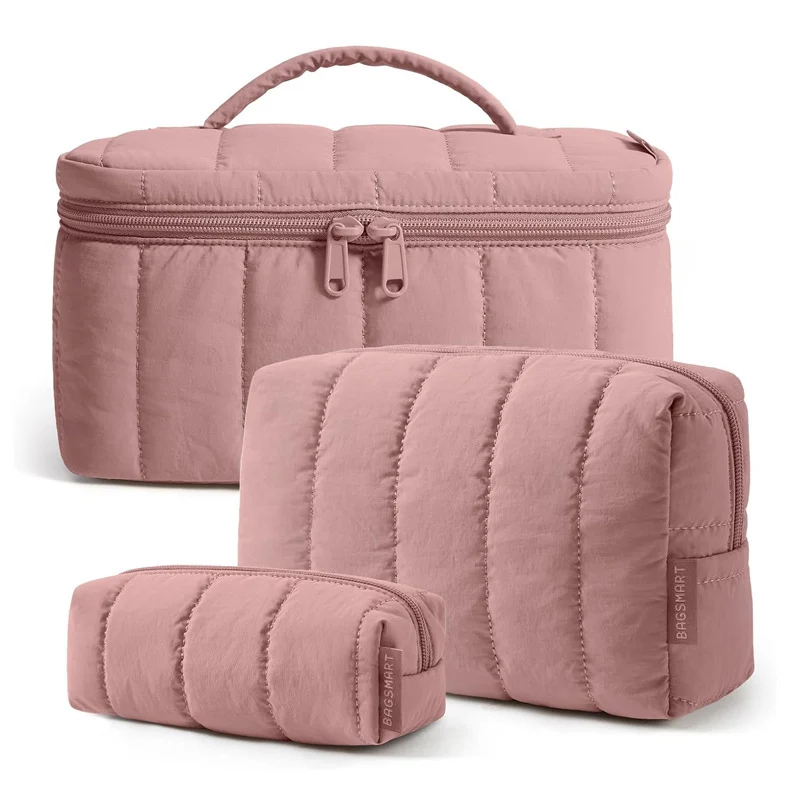
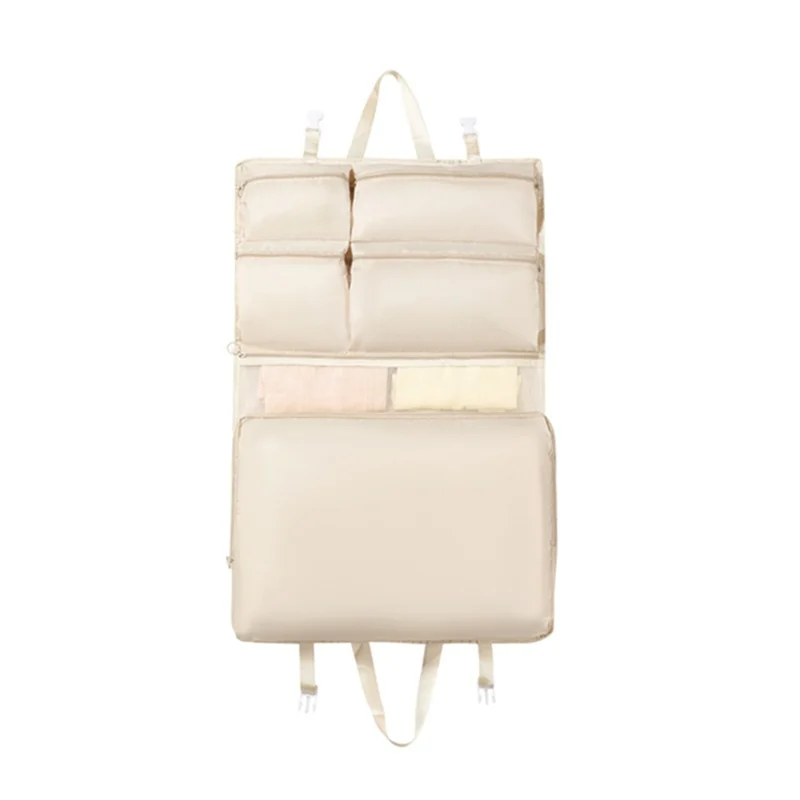
| Textiles | Branding, bundles, and reuse | Fiber content, sizing, colorfastness | Are labels and measurements consistent across batches? |
| Personalized gifts | Higher perceived value | Artwork, setup, late approvals | Can the design be approved before the factory cutoff? |
| Electrical/battery items | Strong visual appeal | Testing, voltage, batteries, liability | Which documents and destination standards apply? |
A category scorecard for your target market
Score each category from 1 to 5 for margin potential, shipping efficiency, compliance effort, breakage, seasonality, and repeatability. A category with a high margin score but poor repeatability may be suitable for a limited test, not a container-sized commitment.
Browse relevant wholesale product categories only after your scorecard identifies a product family worth quoting.
How do you protect holiday margins with samples, QC, and consolidation?
A low quote improves profit only when the shipped goods match the approved sample and arrive before the selling window closes. Use at least 3 control points, sample approval, production QC, and pre-shipment inspection. Market-access requirements depend on the product and destination, not price alone.
Approve a golden sample and written specification before bulk production. Review color, dimensions, material, print, attachments, odor, carton marks, and finish. For fragile goods, define a drop or abrasion check. For textiles, confirm fiber content, sizing, and care labels.
Schedule a pre-shipment inspection and write down the defect standard. Holiday inventory leaves little time for rework, replacement, or a second export booking. Keep inspection photos with the purchase order and record every approved deviation.
Consolidation can reduce fragmented freight when several suppliers serve one range. The warehouse must receive, count, label, and inspect cartons in the right sequence. Request carton-level packing lists and reserve a small buffer for fast movers.
The holiday order-control timeline
Product shortlist -> sample approval -> production -> inspection -> consolidation -> export booking -> destination receiving -> listing or retail launch.
When should you source Christmas products for the best margin?
Earlier sourcing usually protects product choice and negotiation room. A practical calendar has 4 phases, Q1 discovery, Q2 samples, Q3 production, and Q4 replenishment. Adapt that model to your lane, cash flow, destination, product, and transport mode.
This planning rhythm works as a starting point:
- Q1: Review last season, identify repeatable products, and define the customer and channel.
- Q2: Request samples, compare suppliers, finalize customization, and confirm compliance.
- Q3: Place production orders, complete QC, book freight, and prepare listings or retail packaging.
- Q4: Replenish only proven fast movers. Avoid deep speculative buys.
Work backward from the date inventory must be available to sell. Subtract receiving, freight, inspection, production, sampling, and decision time. Then add a contingency buffer. Peak factory capacity, freight demand, and holiday closures can compress the calendar.
What is the simplest way to turn these ideas into a profitable Christmas range?
Start with a small range and a one-page sourcing brief. A 70/20/10 mix is one way to budget: 70% dependable core items, 20% differentiated margin drivers, and 10% controlled experiments. Treat it as a planning device, not a guarantee.
Choose one customer and channel first. Discount retail, gift shops, marketplaces, supermarkets, and corporate gifting each reward different package sizes, price points, and compliance documentation. Do not use one range brief for all of them.
Your brief should state target retail price, landed-cost ceiling, quantity, packaging, customization, required documents, delivery date, and reorder plan. When the order spans multiple suppliers or product families, compare self-sourcing with Yiwu sourcing support.
Sellers Union describes its capabilities as a network of 10,000+ factories, Yiwu and Ningbo operating bases, multi-supplier consolidation, 30 days of free warehousing, and 0% commission on a first trial order. These are company-reported commercial details; confirm the current scope and terms before quoting them.
Request a Christmas product shortlist
Share your target categories, quantity, destination, packaging requirements, and latest arrival date. Sellers Union can return a product shortlist and sourcing route for review.
Frequently asked questions
What are the most profitable Christmas products to sell?
No category wins every market. Compact décor, gift packaging, soft goods, and personalized products make sensible starting points because they can combine perceived value with manageable packing. Test landed cost, compliance, MOQ, and sell-through before scaling. Holiday demand alone will not protect your margin.
When should I start sourcing Christmas products from China?
Begin product discovery and supplier comparison in Q1 or Q2 for most imported ranges. Allow at least 5 separate checkpoints, discovery, sample, approval, QC, and receiving. The right date depends on destination and mode, so work backward from the date inventory must be available. Add contingency rather than planning against the last possible shipping day.
How do I calculate the margin on a wholesale Christmas product?
Subtract product, packaging, QC, freight, duty, payment fees, marketplace fees, and expected returns from the selling price. Divide the contribution by the selling price for gross margin. Markup uses cost as the denominator, so it produces a different percentage. Keep the two measures separate when comparing supplier quotes.
Are Christmas lights and battery products worth sourcing?
They can be attractive, but they need a higher compliance and shipping screen. Check voltage, plug type, batteries, testing, labeling, destination rules, carrier restrictions, and marketplace documentation before quoting a retail price. Battery products should not be treated like ordinary soft décor.
Can I mix products from several Christmas suppliers in one shipment?
Yes, when cartons are compatible and the consolidation warehouse can receive, count, inspect, label, and document each supplier’s goods. Consolidation can simplify freight, but it does not replace QC. Use carton-level packing lists and agree on the cut-off date for late suppliers before booking the export shipment.
Conclusion
High-margin Christmas products are selected through cost control, not trend lists alone. Start with a customer and channel, screen product size and compliance, compare suppliers through a complete RFQ, and approve samples before committing to production. Then protect the order with QC, consolidation, and a backward-planned calendar.
The strongest first range is usually focused: compact non-electrical décor, gift packaging, soft goods, or controlled personalization. Keep a clear landed-cost ceiling and avoid buying more seasonal inventory than your sell-through plan supports.
Sellers Union is a China-based sourcing and export group with operating bases in Yiwu and Ningbo. Our service model combines supplier comparison, sample coordination, quality checks, multi-supplier consolidation, and export support for international B2B buyers. Confirm current service scope and commercial terms for your destination before placing an order.
When you are ready, send Sellers Union your target categories, quantities, destination, packaging needs, and latest arrival date. Request a quote.
The best seasonal sourcing decision is often the product you can still sell after Christmas. Reusable packaging, neutral colors, and adaptable gift products can turn a one-month opportunity into a broader annual range.

Ivy is a Sourcing Specialist at Sellers Union. She shares hands-on experience in supplier selection, quality control, and market trends to help global wholesalers make informed decisions. Her goal is to simplify the sourcing process and help brands build efficient supply chains in the industry.