







The global demand for beauty accessories continues to surge, driven by rising consumer interest in self-care, professional-grade at-home treatments, and personalized grooming experiences. For international buyers and brand owners, sourcing beauty accessories from China offers unmatched advantages in cost, scale, and customization—but only if you know how to navigate the landscape. This guide delivers seven pro tips for sourcing and importing beauty accessories efficiently, from supplier evaluation to risk mitigation, so you can build a reliable, profitable supply chain.
Key Takeaways
- China dominates global beauty accessories manufacturing, with specialized hubs in Guangdong, Zhejiang, and Hebei offering distinct advantages.
- Supplier evaluation should go beyond price—focus on on-time delivery rates, response times, and reorder frequency as reliability proxies.
- Customization depth varies widely; look for suppliers offering in-house mold development, Pantone color matching, and packaging design.
- Start with small trial orders and use secure payment methods like Trade Assurance to minimize risk before scaling up.
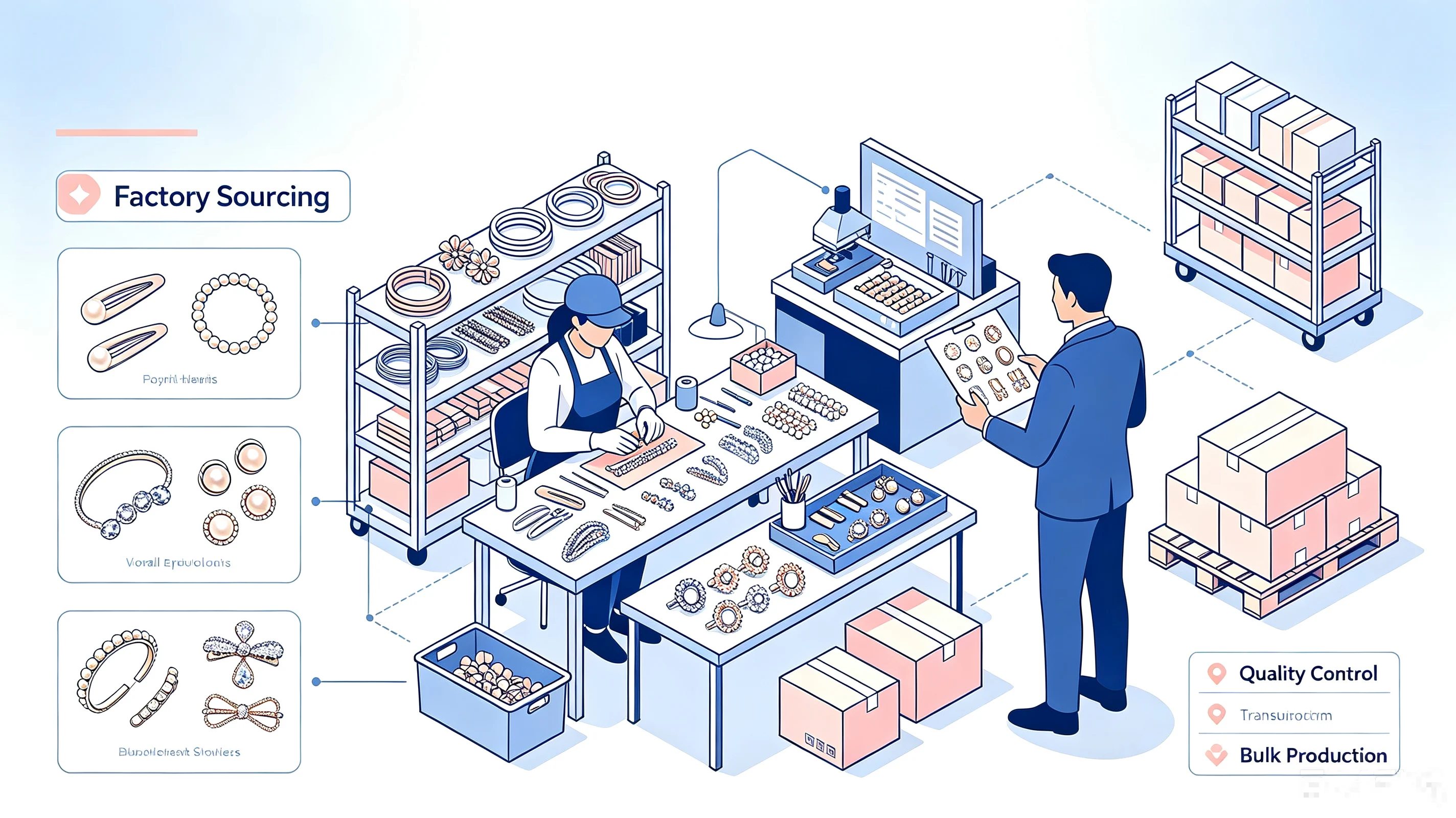
1. Understanding China’s Beauty Accessories Manufacturing Hubs
China’s beauty accessories manufacturing ecosystem is geographically concentrated, with each region offering distinct strengths. Knowing where to look saves time and improves supplier.
Guangdong Province (Guangzhou, Shenzhen, Dongguan) leads in innovation and premium production. This region excels in high-precision cosmetic brushes, facial rollers, and multi-functional skincare devices. Factories here often hold certifications like ISO9001, SA8000, and FSC, making them suitable for brands targeting regulated Western markets.
Zhejiang Province (Yiwu) dominates cost-effective, high-turnover production. Yiwu is ideal for mass-market accessories such as dual-ended brushes, travel kits, and promotional bundles. The region’s agile logistics network supports low minimum order quantities (MOQs) and fast turnaround times, perfect for startups testing new product lines.
Hebei Province (Baoding) specializes in mid-to-high-end brush sets, balancing functionality and aesthetics. Baoding accounts for over 70% of China’s makeup brush output, benefiting from deep-rooted craftsmanship in bristle processing and ferrule assembly.
Henan Province has emerged as a hub for diversified applicators and false eyelashes, with Xuchang producing over 70% of the world’s human hair wigs.
Understanding these hubs helps you target the right beauty accessories manufacturer for your product category and budget.
2. Building a Supplier Evaluation Framework That Works
Selecting a reliable partner requires more than scanning price lists. A structured evaluation framework should include three core pillars: operational reliability, technical capability, and compliance readiness.
Operational Reliability Metrics
Quantifiable KPIs provide early signals of a supplier’s professionalism:
- On-time delivery rate ≥95%: Indicates strong production planning. Suppliers like Baoding Belleza and Luyi County Zhenghe report 100% on-time delivery.
- Response time ≤2 hours: Reflects proactive communication. Fast responders are better equipped to resolve issues during production cycles.
- Reorder rate >20%: Signals repeat business confidence. Shenzhen Emily stands out with a 25% reorder rate, indicating consistent customer satisfaction.
Technical and Customization Capacity
For branded buyers, private label beauty accessories are essential for differentiation. Evaluate suppliers based on their ability to support:
- Material selection (e.g., recycled plastic, bamboo handles, cruelty-free bristles)
- Pantone color matching and gradient finishes
- Logo application (engraving, stamping, silk screening)
- Packaging design (retail boxes, magnetic closures, eco-friendly wraps)
- Digital mockups and prototyping speed
Suppliers like Henan Zhengyi Industry Co., Ltd. offer full OEM/ODM support, including mold development and custom packaging design, making them ideal for launching signature collections.
Compliance and Quality Assurance
Direct-contact beauty tools require strict adherence to international standards. Request documentation including:
- Material Safety Data Sheets (MSDS) for bristles, adhesives, and coatings
- REACH/RoHS compliance for EU markets
- FDA guidelines for tools involving skin contact
Suppliers like Beauty Yaurient (Shenzhen) hold SGS SA8000, ISO9001, ISO14001, and FSC certifications, demonstrating commitment to quality and ethical production.
3. Private Label & Customization: Turning Standard Products into Brand Assets
In today’s competitive market, private label beauty accessories are no longer optional—they’re a strategic necessity. The right beauty tools supplier China can transform generic products into brand assets.
What to Look for in Customization Partners
True differentiation comes from deep customization—not just logo printing. Advanced suppliers offer:
- In-house mold creation for ergonomic handles
- Custom box packaging with mockup generation
- Multi-material brush configurations (e.g., tapered foundation + stippling combo)
4. Price Comparison: Finding Value Beyond the Lowest Cost
While pricing should never be the sole decision factor, understanding cost differences across suppliers optimizes value without compromising quality.
Lower MOQs often come with higher per-unit costs, making them suitable for sampling or small brands.
5. Quality Control: Ensuring Consistency Across Batches
Without third-party certifications, buyers must implement hands-on quality verification protocols to ensure beauty accessories wholesale shipments meet specifications.
Pre-Production Validation
Always request physical samples before placing bulk orders. Evaluate:
- Bristle softness and shedding resistance
- Handle finish and structural integrity
- Ferrule adhesion and corrosion resistance
- Packaging durability and labeling accuracy
Digital mockups are useful but insufficient. Real-world testing under salon or consumer conditions reveals flaws not visible in photos.
In-Line and Final Inspections
For large orders, consider hiring a third-party inspection agency (e.g., SGS, TÜV) to conduct random checks during production and before shipment. Look for defects such as misaligned bristles, glue overflow, or inconsistent coloring. Some suppliers allow virtual factory audits via video call—an increasingly common practice among transparent vendors.
6. Risk Mitigation Strategies for Cross-Border Transactions
International procurement carries inherent risks. Protect your investment with these strategies:
Use Secure Payment Methods
Opt for platforms with escrow protection, such as Alibaba Trade Assurance, to ensure goods match specifications before releasing full payment. This adds a layer of security, especially for first-time orders.
Start Small, Scale Gradually
Begin with smaller trial runs to validate quality and logistics before increasing order sizes. Many suppliers, including Shanghai Zhenzhan and Baoding Belleza, accommodate orders as small as 2–3 sets, making initial evaluation both feasible and affordable.
Verify Compliance Documentation
For regulated markets (EU, USA, Canada), confirm that suppliers can provide Material Safety Data Sheets (MSDS) and compliance documentation such as REACH or RoHS reports. Ensure all documentation is up-to-date and matches the specific batch being shipped.
Document Everything
Maintain clear communication logs and signed product specifications to prevent disputes. Define preferred contact methods, language proficiency, and escalation paths upfront.
7. Building Long-Term Supplier Relationships
The most successful buyers move beyond transactional interactions to build collaborative partnerships with their cosmetic accessories wholesale suppliers.
What to Look For
Prioritize suppliers who invest in relationship management—demonstrated by high reorder rates, responsive support, and willingness to co-develop new products.
Strategic Partnership Benefits
Consider signing annual contracts with volume incentives or consignment arrangements to lock in favorable pricing and secure supply during peak seasons.
FAQs for Importing Beauty Accessories from China
Q1:How do I verify a beauty accessories supplier’s reliability?
Cross-reference platform-provided metrics: on-time delivery rate, response time, and reorder frequency. Request third-party audit reports if available. Always test with a sample batch before scaling up. Suppliers with reorder rates above 20% and on-time delivery above 95% are generally reliable.
Q2:What is the typical minimum order quantity (MOQ) for custom beauty accessories?
MOQs vary widely. Established manufacturers may require 500–1,000 units for custom designs, while newer suppliers may accept 100–300 units or even 2–3 sets for sampling. Always negotiate MOQ terms during initial discussions and consider starting with smaller trial runs.
Q3:Do suppliers provide free samples for beauty accessories?
Most charge a nominal fee for samples but deduct it from future bulk orders. For high-volume buyers or orders above 500 units, some suppliers offer free samples. Custom prototypes usually involve partial cost recovery.
Q4:Can I visit the factory in person?
Yes—reputable suppliers welcome onsite visits, especially for B2B clients placing large orders. Guangdong-based factories frequently host meetings for customization planning and production audits. Schedule visits in advance to ensure availability.
Q5:How long does sampling take for beauty accessories?
Standard samples take 5–10 days; customized versions require 10–15 days. Some suppliers offer digital previews within 48 hours. Add 5–7 days for express international shipping.
Q6:What shipping terms should I use for importing beauty accessories from China?
Confirm preferred Incoterms (FOB, CIF, or DDP) with your supplier and understand who handles customs clearance and import duties. FOB is common for experienced buyers, while DDP simplifies the process for first-time importers by including duties and delivery.
Conclusion
Sourcing beauty accessories from China offers significant opportunities for cost savings, product differentiation, and supply chain scalability—but success requires a strategic, data-driven approach.