




1. Introduction
If you’re importing products from China or anywhere else in the world, you’ve probably come across shipping terms like FOB, CIF, or DDP. These aren’t just logistics lingo—they define exactly who pays for what, who takes the riskoraz where responsibilities change hands.
All of these terms fall under a standardized global system called Incoterms, short for International Commercial Terms, published by the International Chamber of Commerce (ICC). The current version—Incoterms 2020—is still the latest edition in 2025 and is widely used in global trade contracts, pro forma invoices, and purchase orders.
As a professional sourcing agent based in Yiwu Market, the world’s largest wholesale market, we assist hundreds of global buyers every year in navigating these terms—especially when sourcing from thousands of small to mid-sized suppliers who may quote using different Incoterms based on habit or negotiation.
This article will help you understand what each Incoterm means in real-world importing, without overwhelming legal language. Let’s break it down.
2. Incoterms Classification: From Minimal to Maximum Seller Responsibility
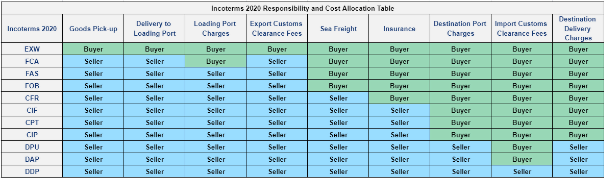
Instead of memorizing the E/F/C/D groups, a better way to approach Incoterms is by looking at how much responsibility the seller takes on. The more the seller covers (freight, insurance, duties), the less you need to handle—but the cost and risks might also be higher.
Here’s a simplified spectrum:
| Term | Who Handles Freight? | Customs Clearance | Suitable For |
| EXW | Buyer | Buyer | Experienced importers with own logistics |
| FOB / FCA / FAS | Buyer | Buyer (exporter may handle export) | Most Yiwu wholesale orders |
| CFR / CIF / CPT / CIP | Seller (to destination port) | Buyer | New buyers wanting partial support |
| DAP / DDP | Seller (to final address) | Seller (DDP), Buyer (DAP) | Cross-border eCommerce, turnkey sourcing |
| DDU | Deprecated (use DAP or DDP instead) | — | Still appears in legacy contracts |
We’ll walk through each term briefly, with practical notes on when and how it’s used in sourcing from China.
3. EXW (Ex Works): You Handle Everything
EXW (Ex Works) means the seller makes the goods available at their own facility—factory, warehouse, or workshop. After that, everything is on you: inland transport, export clearance, international freight, import duties, and final delivery.
Example: If a Yiwu factory quotes you EXW, you’ll need to:
- Book a local truck to pick up the goods
- Handle export customs in China (which many small suppliers can’t do)
- Arrange sea/air freight and customs at destination
When to use it:
- You have a reliable freight forwarder or local agent in China
- You’re consolidating goods from multiple suppliers
- You’re confident handling all logistics steps
Buyer risk level: Very High
Control level: Maximum control over shipping
Recommended for: Experienced importers or those with China-based sourcing agents
4. FOB (Free on Board): The Yiwu Standard
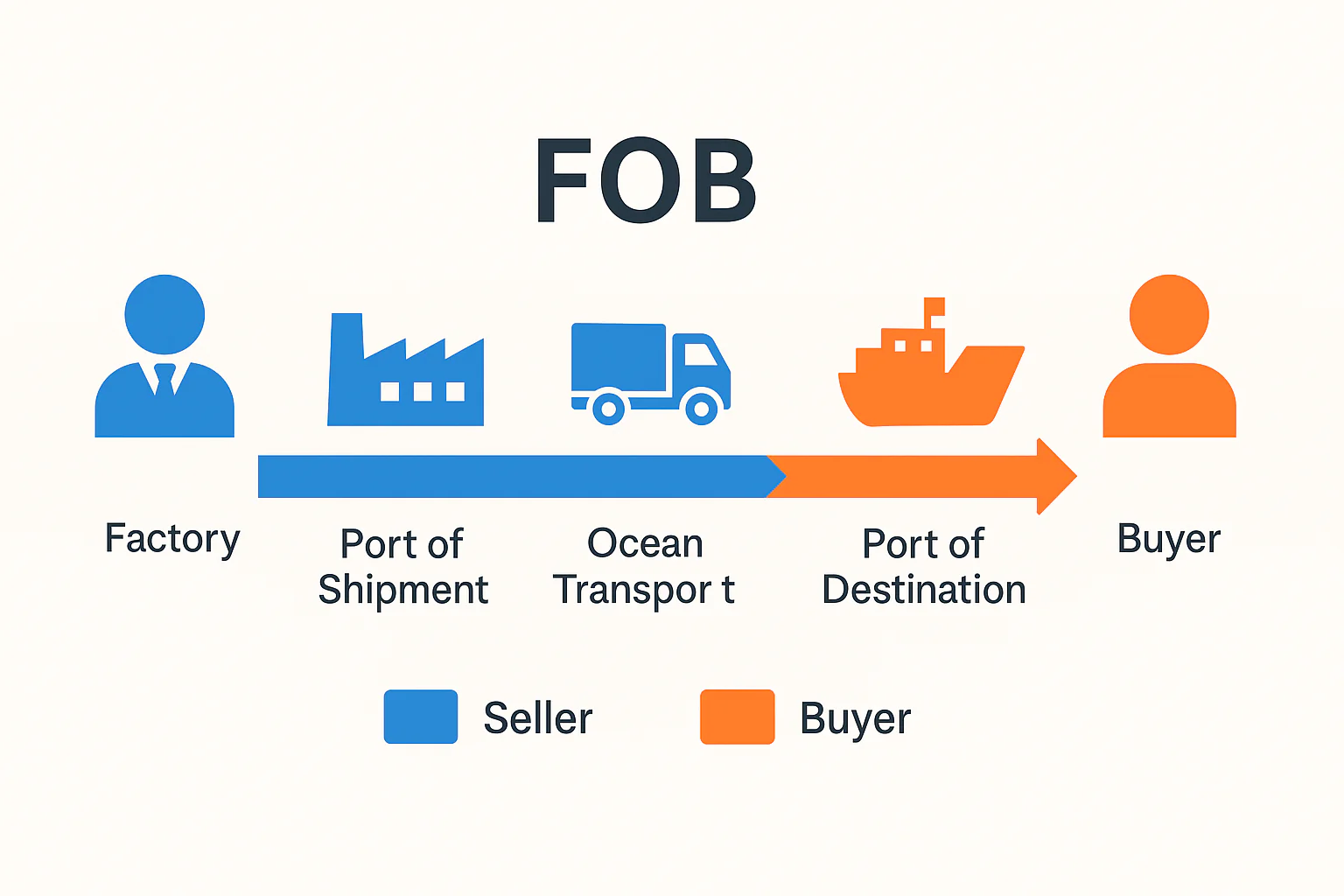
FOB is one of the most common terms you will see when sourcing from China. It means the seller is responsible for delivering the goods to the port and loading them onto the ship. After that, the risk and cost transfer to you.
If a Yiwu supplier quotes FOB, it usually means FOB Ningbo or FOB Shanghai. These are the nearest seaports. The supplier will handle inland transport and export clearance, which makes your job easier. You take over from the port onwards.
Example: Your supplier in Yiwu quotes FOB Ningbo
- You only need to book sea freight from Ningbo to your destination port
- You handle customs clearance and local delivery after the ship arrives
When to use it:
- You want the supplier to take care of transport to the port
- You work with your own freight forwarder
- You want more control over shipping cost and schedule
Buyer risk level: Moderate
Control level: Wysoki
Recommended for: Most bulk buyers sourcing from Yiwu
5. CIF (Cost, Insurance and Freight): More Convenience with Added Insurance
CIF means the seller pays for shipping and insurance to the destination port. Unlike FOB, under CIF the seller is responsible for contracting and paying for the sea freight as well as insurance covering the goods during transit.
This term reduces your workload because the seller handles the ocean transport and risk coverage until the goods arrive at the destination port. However, you still take care of customs clearance and inland transport after arrival.
Przykład: If your supplier offers CIF Los Angeles
- The price includes delivery to Los Angeles port and marine insurance
- You arrange customs clearance and delivery from the port to your warehouse
When to use it:
- You prefer the seller to manage ocean freight and insurance
- You want a simpler process but still handle import clearance
- You trust your supplier to select reliable carriers and insurance providers
Buyer risk level: Moderate
Control level: Średni
Recommended for: Buyers looking for convenience without full door-to-door service
6. DAP (Delivered At Place): Seller Delivers, Buyer Handles Import
DAP means the seller is responsible for delivering the goods to a specified destination, usually your warehouse or a named place in your country. The seller covers all costs and risks involved in shipping the goods up to that point.
However, under DAP, the buyer is responsible for import customs clearance, duties, and taxes. This term offers convenience because the seller handles international transport and delivery, but you still need to handle the import procedures.
Example: Your supplier quotes DAP New York warehouse
- The seller ships and delivers the goods to your warehouse
- You arrange and pay import customs clearance and related taxes
When to use it:
- You want the seller to manage most of the logistics and delivery
- You have experience or resources to handle import clearance
- You want to avoid dealing with international freight
Buyer risk level: Low to moderate
Control level: Niski
Recommended for: Importers who want simplified shipping but manage import compliance themselves
7. DDP (Delivered Duty Paid): Full-Service Delivery, Minimal Buyer Responsibility
DDP means the seller takes full responsibility for delivering the goods to your final destination, including paying for import duties, taxes, and customs clearance. It is the most buyer-friendly Incoterm because all major shipping steps are handled by the seller.
This term is often used in cross-border eCommerce, small parcel shipping, or turnkey sourcing services. However, in some countries, import regulations may not allow foreign sellers to clear customs on behalf of the buyer. In such cases, DDP may result in delays or unexpected charges.
Example
- Your supplier quotes DDP Paris warehouse, including all freight, insurance, and duties.
- The goods are delivered to your warehouse fully cleared, with no action required on your side.
When to use it
- When you want the simplest buying experience possible.
- When you do not have the resources to deal with customs, duties, or freight forwarders.
- When your shipment is small and the seller already has a DDP route or freight partner.
Buyer risk level
Very low risk since the seller handles the full journey and all regulatory steps.
Control level: Low control, as the seller chooses the shipping method, carrier, and timing.
Recommended for: Buyers with no importing experience, Amazon FBA sellers, or businesses needing fixed total costs.
8. FCA (Free Carrier): Flexible and Air-Freight Friendly
FCA means the seller is responsible for delivering the goods to a carrier or location chosen by the buyer—this could be a freight forwarder’s warehouse, a cargo terminal, or even a truck at the factory gate. After that point, the risk and cost shift to the buyer.
FCA is often used for air freight, courier shipments, and containerized sea freight that doesn’t involve direct loading onto a vessel. It offers more flexibility than FOB, especially when the handover point isn’t a port.
Example
- Your Yiwu supplier quotes FCA Shanghai Airport, meaning they deliver the goods to the air cargo terminal.
- You take over once the airline receives the goods, including freight, insurance, and customs clearance at destination.
When to use it
- When shipping by air, courier, or rail where port loading doesn’t apply.
- When your freight forwarder prefers picking up from a specific location.
- When your supplier can’t deliver to port but can handle local transport.
Buyer risk level: Moderate. You take over once goods are handed to your nominated carrier.
Control level: High. You choose the carrier, route, and timing.
Recommended for: Buyers using air freight or third-party logistics providers with pickup points in China.
Common misunderstanding: FCA is often confused with FOB. The key difference is that FOB requires delivery to a port and loading onto a vessel, while FCA allows handover at any agreed location—including airports or freight depots.
9. CPT (Carriage Paid To): Seller Pays Freight, Buyer Takes Risk Early
CPT means the seller pays for shipping the goods to a named destination, but the risk transfers to the buyer once the goods are handed over to the first carrier, not when they arrive. This term is often used in air freight, rail transport, and multimodal logistics.
Unlike CIF or CIP, CPT does not include insurance. That means although the seller arranges and pays for the transport, you bear the risk during transit unless you buy separate coverage.
Example
- Your supplier quotes CPT Hamburg Airport, meaning they pay for air freight to Hamburg.
- Risk passes to you once the goods are handed to the airline or freight company at departure.
When to use it
- When you want the seller to handle transport but will arrange your own insurance.
- When working with a freight forwarder at the destination.
- When you’re shipping by air or rail and want delivery to a city or hub.
Buyer risk level: Moderate to high, depending on the route and whether you add insurance.
Control level: Medium. The seller arranges shipping, but you control post-arrival steps.
Recommended for: Buyers with some logistics experience who want the seller to prepay freight.
Key difference from CIP: CPT and CIP are similar, but CIP includes insurance while CPT does not. If you want peace of mind, use CIP instead.
10. CIP (Carriage and Insurance Paid To): Freight and Risk Covered
CIP is similar to CPT, with one key difference: the seller must also provide insurance for the goods during transit. Under CIP, the seller arranges and pays for both transport and minimum insurance coverage up to the named destination.
Risk still transfers to the buyer once the goods are handed over to the first carrier, but with insurance in place, you’re partially protected if anything goes wrong during shipping.
This term is often used for high-value or sensitive shipments, especially by air or courier.
Example
- Your supplier quotes CIP Toronto Airport, meaning they pay for air freight and insurance up to Toronto.
- You handle import customs and final delivery, but you’re insured in case of damage or loss in transit.
When to use it
- When you’re importing higher-value goods and want basic insurance included.
- When you want a safer alternative to CPT but similar logistics setup.
- When using air freight or multimodal routes where risk of damage or loss is higher.
Buyer risk level: Moderate. Risk transfers early, but insurance reduces exposure.
Control level: Medium. Seller controls shipping, you handle customs and last-mile delivery.
Recommended for: Buyers who want freight and insurance bundled but still manage import clearance.
Key difference from CPT: CIP includes insurance by default. CPT does not. If your cargo has commercial value or you’re shipping to a farther destination, CIP is the safer choice.
11. CFR (Cost and Freight): Seller Pays Transport, Buyer Bears Risk
CFR means the seller is responsible for paying the cost of transporting the goods to the destination port, but the risk transfers to the buyer once the goods are loaded onto the vessel at the port of origin.
Unlike CIF, CFR does not include insurance. That means while the seller pays for freight, the buyer is exposed to risk during ocean transit unless separate insurance is arranged.
This term is widely used for full container sea freight, especially when buyers want the seller to handle ocean booking but prefer to manage risk and post-arrival logistics themselves.
Example
- Your supplier quotes CFR Rotterdam Port, meaning they pay for sea freight to Rotterdam.
- You take on the risk once the goods are loaded at the Chinese port, and handle import clearance after arrival.
When to use it
- When you want the seller to book ocean freight but you’ll insure the shipment yourself.
- When you’re familiar with import procedures at your destination port.
- When your shipment is large enough for full-container transport.
Buyer risk level: High. The risk shifts early, and no insurance is included.
Control level: Medium. Seller arranges shipping, buyer manages insurance and port handling.
Recommended for: Buyers with experience in sea freight and risk management.
Key difference from CIF: CFR includes freight but not insurance. If you want basic insurance included, use CIF instead.
12. FAS (Free Alongside Ship): Pre-Loading at the Port, Buyer Takes It from There
FAS means the seller delivers the goods alongside the vessel at the named port of shipment. This includes getting the goods to the export port and placing them at the dock or terminal, ready for loading. From that point, the buyer is responsible for loading the goods, arranging sea freight, and all further costs and risks.
FAS is rarely used in containerized shipping. It applies more often in bulk cargo, break-bulk, or project cargo—where the buyer charters a vessel and wants control over port operations and loading.
Example
- A supplier quotes FAS Ningbo Port, meaning they deliver goods to the dock next to your chartered vessel.
- You arrange loading onto the ship, pay for sea freight, insurance, and all steps after.
When to use it
- When you’re shipping bulk cargo or chartering a vessel.
- When your logistics partner controls port loading.
- When you want full oversight at the port of departure.
Buyer risk level: High. You take on risk before loading, and most shipping responsibilities.
Control level: Very high. You manage loading, sea freight, and beyond.
Recommended for: Buyers with specialized shipping arrangements, not standard container importers.
Common misunderstanding: FAS is not suitable for standard container shipping. If your cargo goes in a container, consider FOB instead.
13. DDU (Delivered Duty Unpaid): Legacy Term You Still Might See
DDU means the seller delivers the goods to a destination specified by the buyer, but does not pay for import duties, taxes, or customs clearance. The buyer takes over once the goods arrive, handling all local regulatory steps and payments.
This term was officially replaced in Incoterms 2010 by two terms: DAP (Delivered At Place) and DDP (Delivered Duty Paid). However, many suppliers, freight agents, and even older contract templates still use DDU out of habit or system limitations.
Functionally, DDU is very similar to DAP, where the seller delivers but the buyer clears customs and pays duties.
Example
- A supplier quotes DDU Los Angeles, meaning they’ll deliver the goods to your location but expect you to handle all import duties.
- You receive the shipment but must arrange customs clearance and payment before final delivery.
When to use it
- When you receive a quote using DDU and want to confirm the seller isn’t covering import taxes.
- When working with older supply chains or systems that haven’t adopted DAP/DDP.
- When you’re comfortable managing import compliance at the destination.
Buyer risk level: Moderate. You’re responsible for all destination country compliance and costs.
Control level: Medium. You control import procedures but not international transport.
Recommended for: Buyers working with legacy partners or reviewing old contracts.
Key point: Don’t request DDU in new contracts. Use DAP or DDP instead, based on whether you want the seller to pay import taxes.
Conclusion: Choosing the Right Incoterm for Your Business
Understanding Incoterms is not about memorizing definitions—it’s about choosing the right level of cost, control, and risk for your importing strategy.
- New importers often prefer DDP or DAP to keep things simple and avoid logistics complexity.
- Experienced buyers may choose FOB or FCA to work with their own forwarders for better rates or consolidation.
- High-volume importers often use a mix, depending on product type, supplier capabilities, and shipping mode.
When sourcing from China—especially in wholesale hubs like Yiwu, where suppliers range from small workshops to large-scale exporters—choosing the wrong Incoterm can lead to misunderstandings, delays, or unexpected costs. Some suppliers may quote EXW by default, not realizing you expect export clearance to be included. Others may offer CIF without clarifying insurance coverage.
That’s where a local sourcing partner makes a difference.
About Us
Sellers Union Chiny is a leading sourcing agent based in Yiwu, with over 25 years of experience helping international buyers navigate Chinese supply chains. From verifying factories to managing complex shipments, we handle every step—from order consolidation to customs documentation—based on the right Incoterms for your business.
Whether you’re just starting out or optimizing an existing supply chain, we help you avoid costly misunderstandings and gain full visibility and control.
Need help choosing the right term for your next Yiwu shipment?
Contact our team for tailored support and transparent coordination with your suppliers and forwarders.

Ivy is a Sourcing Specialist at Sellers Union. She shares hands-on experience in supplier selection, quality control, and market trends to help global wholesalers make informed decisions. Her goal is to simplify the sourcing process and help brands build efficient supply chains in the industry.