







A Historic Moment in the Silver Market
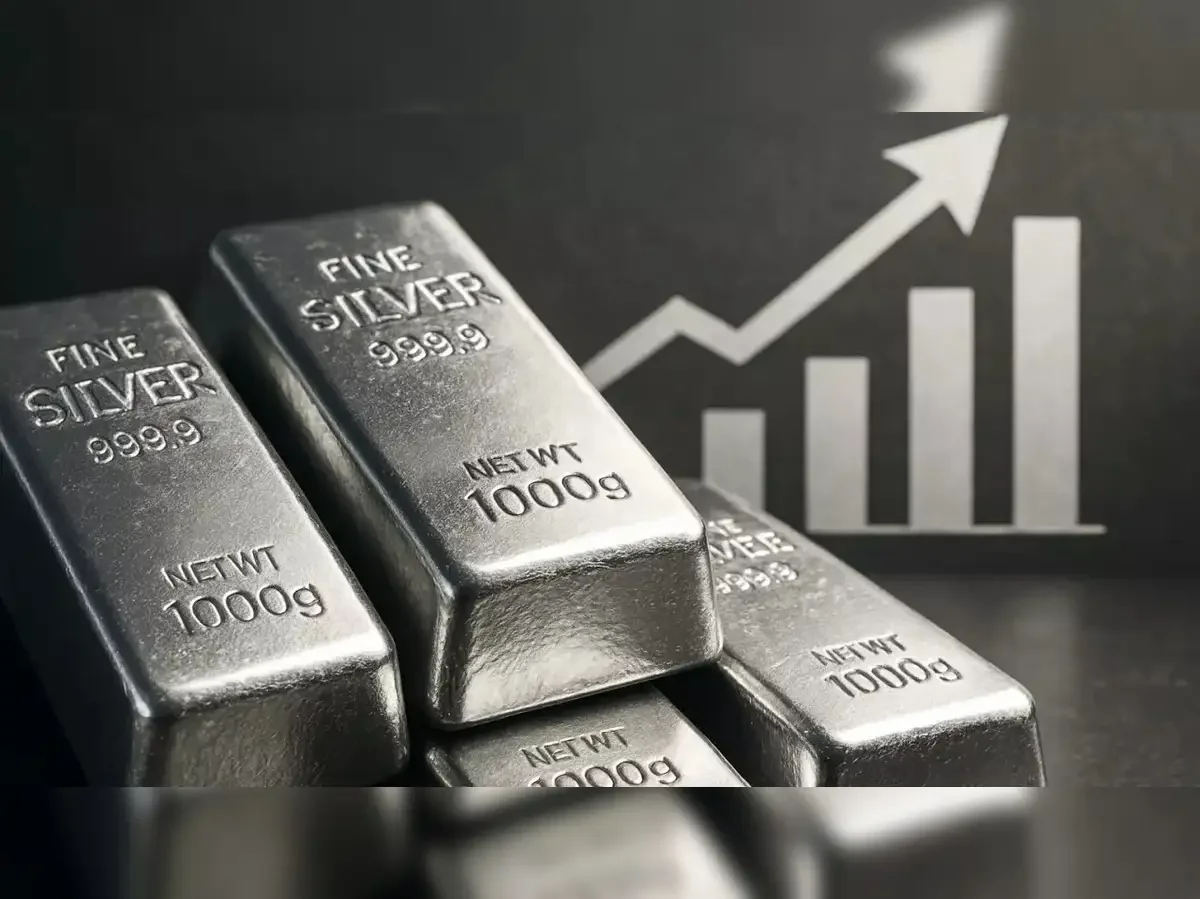
December 23, 2025 marks a watershed moment in precious metals history. Spot silver prices surged past the $70 per ounce milestone for the first time ever, capping off an extraordinary year with a staggering 142% gain. This isn’t just another commodity rally—it’s a fundamental shift in how global markets value this versatile industrial metal.
This breakthrough didn’t happen in isolation. It’s part of a broader precious metals bull market that has seen gold repeatedly hit new all-time highs throughout the year. However, silver’s performance has been nothing short of spectacular, outpacing gold by a considerable margin. The surge reflects silver’s unique dual nature: it serves both as a safe-haven asset during uncertain times and as an indispensable industrial commodity driving modern technology forward.
Market analysts attribute this historic rally to a perfect storm of factors—persistent safe-haven demand amid geopolitical tensions, expectations of Federal Reserve interest rate cuts, and most critically, surging industrial consumption that shows no signs of slowing down.
The Three Pillars Driving Silver’s Surge
1. Supply Deficits Reaching Critical Levels
The global silver market faces its sixth consecutive year of supply deficits, a situation that has grown increasingly dire. Key supply challenges include:
- Byproduct dependency: Approximately 70% of silver comes as a byproduct of mining other metals—primarily copper, lead, and zinc
- Limited primary production: Silver supply is largely tied to base metal mine production decisions, not silver prices alone
- Long development timelines: Opening new primary silver mines requires years of planning, permitting, and development
- Declining ore grades: Existing mines struggle with declining ore quality and rising extraction costs
- Structural shortage: Creates a tight market that responds dramatically to any increase in demand
According to investment analysis, global physical silver demand reached 1.16 billion ounces in 2024, with industrial demand alone hitting a record 680.5 million ounces.
2. Industrial Demand Reaching New Heights
If supply constraints form the foundation of silver’s rally, industrial demand is the rocket fuel. Silver’s unmatched properties make it irreplaceable in countless modern applications:
Key Industrial Properties:
- Highest electrical conductivity of all metals
- Highest thermal conductivity of all metals
- Superior reflectivity for both visible and infrared light
- Excellent antibacterial and antimicrobial properties
- High malleability and ductility
Major Demand Sectors:
Solar Energy (Photovoltaics)
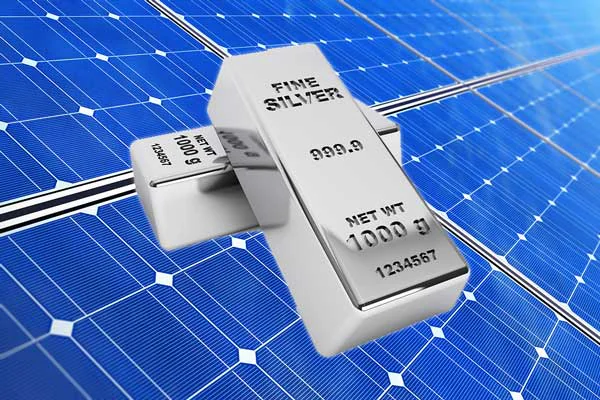
- The solar sector consumed nearly 200 million ounces in 2024
- Each solar panel requires silver paste for photovoltaic cells
- Global solar installations continue breaking records
- China produces over 80% of global solar panels
- Demand expected to continue expanding as countries accelerate renewable energy transitions
Electric Vehicle Revolution
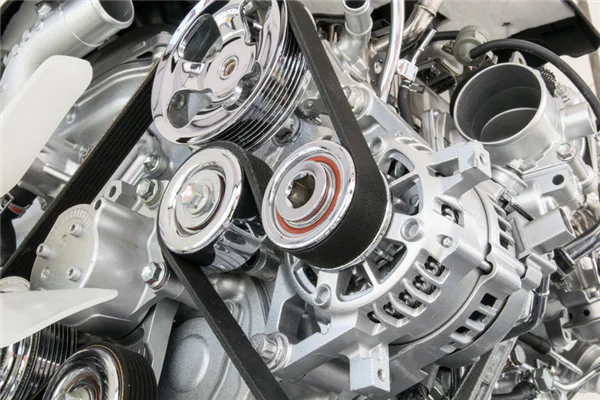
- Battery electric vehicles: 25-50 grams of silver per vehicle
- Hybrid vehicles: 18-34 grams per vehicle
- Traditional ICE vehicles: 15-28 grams per vehicle
- Automotive silver demand projected to reach 90 million ounces by 2025
- Each fast-charging station requires 1-2 kilograms of silver
- Solid-state battery prototypes may need up to 1 kg per 100 kWh battery pack
Artificial Intelligence & Data Centers
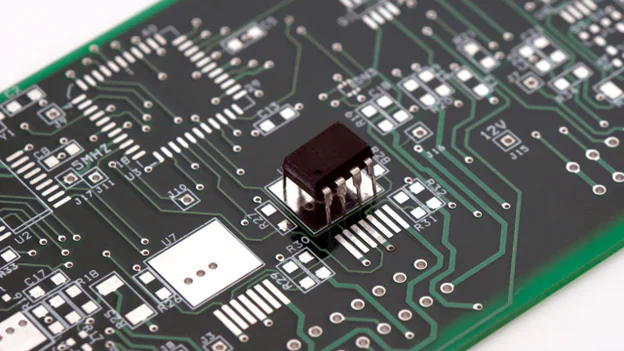
- Servers: 2-3 grams per large server or industrial computer
- AI infrastructure expansion creates entirely new demand category
- Sophisticated chips powering AI rely heavily on silver’s conductivity
- Data center buildout shows no signs of slowing
3. Safe-Haven Investment Flows
While industrial demand tells one part of the story, investment demand completes the picture:
Investment Drivers:
- Geopolitical uncertainty and tension
- Persistent inflation concerns
- Monetary policy uncertainty
- Federal Reserve rate cut expectations
- More accessible price points than gold
- Both institutional and retail investor interest
- Lower opportunity cost with declining interest rates
- Portfolio diversification benefits
The Global Silver Production Landscape
Understanding silver’s supply chain begins with knowing where it comes from.
Top Silver Producing Countries
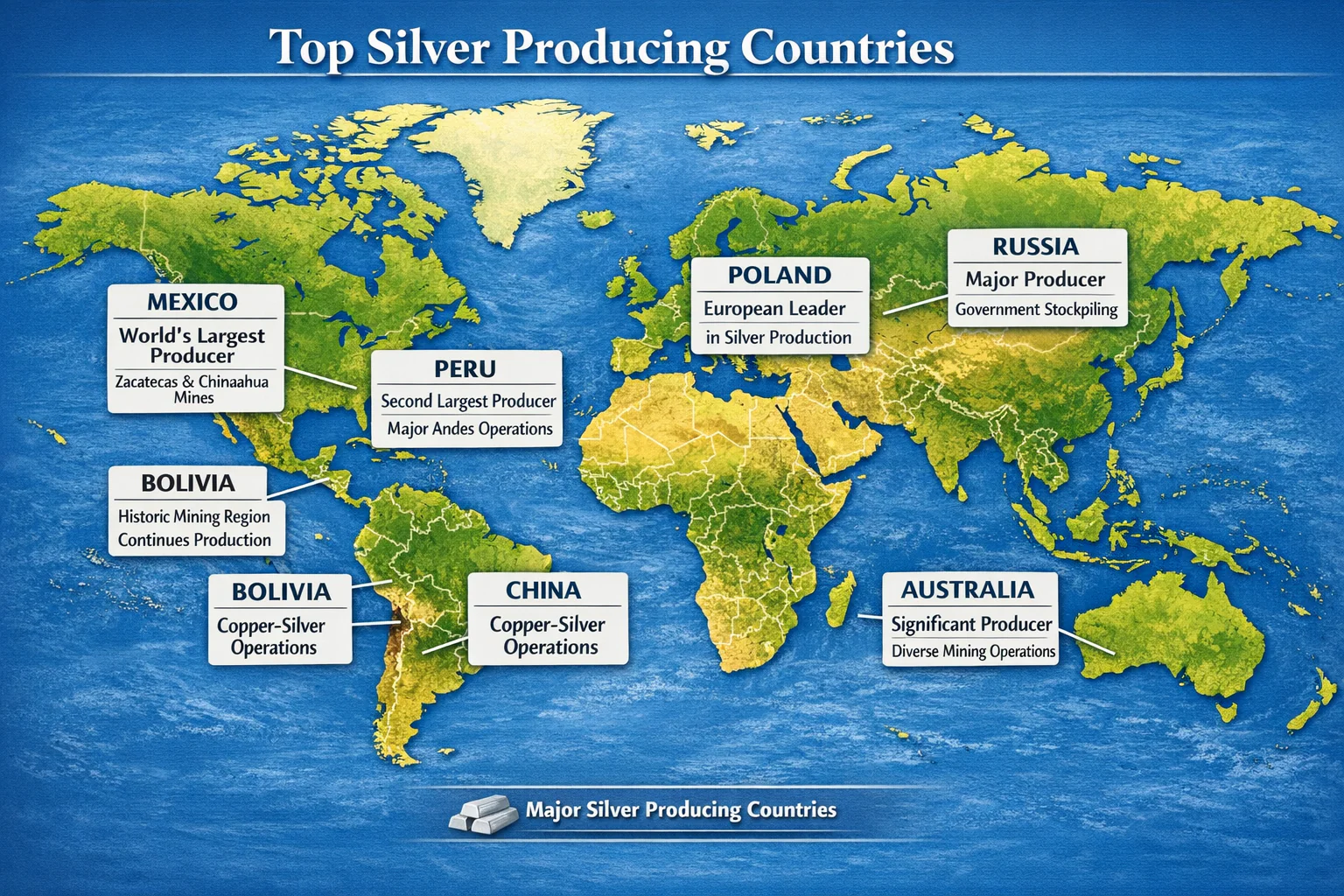
Major Producers:
- Meksyk – World’s largest producer with rich deposits in Zacatecas and Chihuahua states
- Peru – Second largest, with major operations in the Andes mountains
- Chiny – Third largest, primarily as byproduct from extensive base metal mining
- Australia – Significant producer with diverse mining operations
- Chile – Important contributor with copper-silver operations
- Poland – European leader in silver production
- Russia – Major producer with government stockpiling
- Bolivia – Historic mining region continues production
China’s Strategic Role in Silver Processing
While China ranks among the top producers of silver ore, its role in refining and processing is even more significant:
China’s Competitive Advantages:
- Advanced refining technology: Can achieve 99.99% purity levels
- Integrated supply chain: From mining through refining to manufacturing
- Scale and efficiency: Competitive costs despite higher silver prices
- Proximity to manufacturing: Direct pipeline to electronics, solar, and EV industries
- Expertise in electrolytic refining: Both Möbius and Thum Balbach processes
- Strategic positioning: Critical link between raw materials and end products
Industrial Manufacturing Methods
From Ore to Pure Silver
Primary Silver Mining Process:
- Underground or open-pit mining
- Ore crushing and grinding
- Flotation concentration
- Smelting and initial refining
- Electrolytic purification
Byproduct Recovery Methods:
- Extracted during copper smelting (accumulates in anode slimes)
- Recovered from lead-zinc refining processes
- Separated during precious metal processing
- Additional processing through electrolysis
Electrolytic Refining Techniques:
- Möbius Process: Uses silver nitrate electrolyte solution
- Thum Balbach Process: Employs silver sulfate electrolyte
- Result: Both achieve 99.99% purity or higher
- Application: Meets stringent requirements for industrial and investment use
Silver Recycling: Growing Supply Source
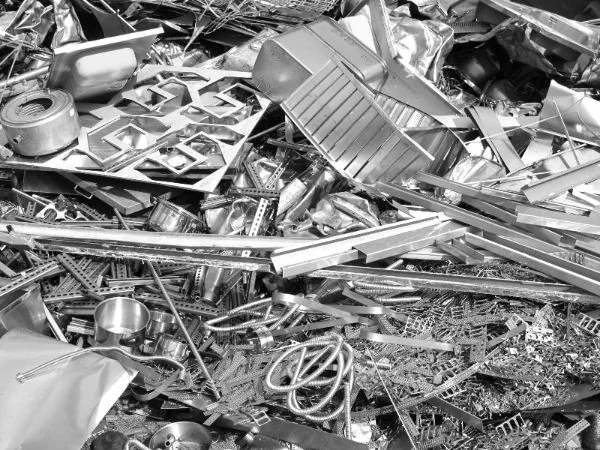
With prices soaring, recycling has become increasingly economically viable:
Major Recycling Sources:
- Electronic waste: One ton of discarded phones contains more silver than one ton of ore
- Photographic waste: Though declining, still yields significant quantities
- Industrial manufacturing scrap: High recovery rates from production processes
- Old jewelry and silverware: Traditional recycling stream
- Solar panel recycling: Emerging source as early panels reach end-of-life
- Medical equipment: Recoverable from decommissioned devices
Recycling Benefits:
- Improved recovery technologies
- Reduced processing costs
- Environmental sustainability
- Increasingly important supply supplement
- Urban mining becomes more profitable at higher prices
Silver’s Critical Role in Modern Manufacturing
According to The Silver Institute, silver is an essential component across numerous industries, with uses spanning from electrical switches and solar panels to catalysts and medical equipment.
Electronics Manufacturing: The Backbone Application
Silver’s position as the most electrically conductive element makes it irreplaceable in electronics. China produces more than 70% of global electronics, creating concentrated demand.
Silver Content in Common Devices:
- Smartphones: 200-300mg per device in circuitry and connections
- Laptops and tablets: 750mg in motherboards and interfaces
- Flat-screen TVs (LCD/LED): 1-2 grams per unit (200 million sold annually)
- Gaming consoles: 2-3 grams due to advanced graphics processing
- Large servers: 2-3 grams per industrial computer
- Data center equipment: Higher concentrations for infrastructure
Key Electronics Applications:
- Multi-layer ceramic capacitors (MLCCs): Found in virtually every electronic device
- Membrane switches: Touch interfaces and control panels
- Printed circuit boards (PCBs): Conductive pathways and connections
- RFID tags: Thin silver film antennas for wireless data transmission
- Conductive adhesives: Bonding electronic components
- Thick-film pastes: Screen-printed electronic circuits
- Contacts and switches: Reliable electrical connections
Zalety produkcyjne:
- Minimal energy loss during operation
- Superior efficiency compared to copper alternatives
- Enables devices to operate at lower voltages
- Reduces heat generation
- Extends component lifespan
Solar Energy: Silver’s Brightest Future
The photovoltaic solar industry has become silver’s largest and fastest-growing sector. Solar energy applications showcase silver’s reflective qualities and conductivity.
Solar Panel Silver Applications:
- Silver paste: Forms conductive fingers on solar cells
- Busbars: Collect and transport generated electricity
- Front and back contacts: Maximize current collection
- Reflective coatings: Enhance light capture efficiency
Industry Statistics:
- China manufactures over 80% of global solar panels
- Silver consumption per panel: 100-130mg (continuously optimizing)
- Total consumption continues rising despite efficiency improvements
- Global installations breaking records year after year
- Demand projected to remain strong through 2030s
Perspektywy na przyszłość:
- Manufacturers developing thinner silver coatings
- Research into silver-saving technologies
- Total consumption still rising due to volume growth
- Copper and aluminum cannot match silver’s efficiency
- Low resistance ensures minimal energy loss
Medical and Antimicrobial Applications
Silver’s powerful antimicrobial properties have been known for millennia, with modern manufacturing finding innovative applications.
Medical Device Applications:
- Wound dressings: Prevent infections, promote healing
- Surgical instruments: Antimicrobial coatings reduce contamination
- Catheters: Silver coatings prevent bacterial colonization
- Bandages and gauze: Embedded silver nanoparticles
- Bone cement: Contains silver to prevent post-surgical infections
- Imaging equipment: MRI and X-ray machines use silver-based films
- Hearing aids: Electrical components require silver
Water Purification:
- Ceramic filters: Silver-treated filters for developing markets
- Hospital water systems: Prevent bacterial and algal growth
- Swimming pools: Silver-copper ionization systems
- Community water supplies: Large-scale purification
- Portable filtration: Emergency and outdoor equipment
Antimicrobial Textiles:
- Face masks (accelerated by COVID-19 pandemic)
- Hospital linens and scrubs
- Athletic wear and socks
- Underwear and intimate apparel
- Odor-control fabrics
- School and public facility textiles
Consumer Products and Daily Applications
Jewelry and Decorative Items:

- Sterling silver (92.5% pure) balances beauty and durability
- China serves as major manufacturing center and consumer market
- Affordable alternative to gold and platinum
- Hypoallergenic properties suitable for sensitive skin
- Traditional cultural significance in many markets

- High-quality flatware and serving ware
- Antimicrobial benefits for food service
- Modern silver-plated items at accessible prices
- Combining functionality with aesthetics
Architectural and Building Applications:
- Low-emissivity (low-E) glass: Thin silver layer reflects heat
- Energy-efficient windows: Trap warmth in winter, reflect heat in summer
- Modern building facades: Reduce energy costs and emissions
- Specialized mirrors: High-precision optical applications
- Coatings: Laser focusing, telescopes, imaging systems
Industrial and Automotive Applications
Industrial manufacturing relies heavily on silver’s versatile properties.
Brazing and Welding:
- Silver brazing alloys: Join metal components in HVAC systems
- Air conditioning units: Reliable joints withstand temperature variations
- Refrigeration: Flexible connections for cooling tubes
- Aerospace applications: Components performing under extreme conditions
- Industrial equipment: High-strength, reliable bonds
- Automotive: Radiators, fuel lines, and critical systems
Chemical Catalysts: According to multiple industry sources, silver catalysts enable critical chemical production:
- Ethylene oxide production: 10 million ounces annually
- Foundation for polyester textiles
- Molded plastic items and components
- Antifreeze coolant (25% of ethylene oxide production)
- Electrical insulation materials
- Industrial adhesives
- Formaldehyde production: Essential for multiple industries
- Solid plastics and resins
- Protective coatings
- Textile treatments
- Building materials
- Pharmaceutical synthesis
Automotive Beyond EVs:
- Power windows: Silver membrane switches
- Power seats: Electrical activation systems
- Engine starters: Silver-coated contacts
- Power trunks: Reliable switching mechanisms
- Control systems: Multiple silver contact points
- Traditional vehicles: 15-28 grams per car
Specialized Applications:
- Batteries: Silver-zinc and silver-cadmium for aerospace
- Nuclear reactors: Control rods to regulate fission
- Bearings: Silver-copper alloys for high-performance applications
- Lubricants: Silver particles enhance performance
- Photography: Still used in commercial film production
- 3D printing: Silver wire filaments for intricate designs
Wholesale Sourcing Opportunities in the Silver Rally
For businesses engaged in global wholesale and procurement, silver’s historic rally creates both challenges and opportunities.
China’s Manufacturing Ecosystem Advantages
Strategic Benefits:
- Integrated supply chain: From refining to manufacturing
- Proximity to capacity: Direct access to processing facilities
- Established relationships: Long-term supplier networks
- Manufacturing expertise: Decades of specialized experience
- Economies of scale: Concentration enables competitive pricing
- Quick adaptation: Faster response to market changes
- Innovation investment: Continuous silver-saving technologies
Key Manufacturing Sectors:
- Electronics (70%+ global production)
- Solar panels (80%+ global production)
- Consumer goods manufacturing
- Automotive components
- Medical device production
Strategic Sourcing Considerations
Price Management Strategies:
- Understand silver content
- Calculate silver percentage in products
- Forecast price impacts accurately
- Negotiate based on content knowledge
- Monitor silver price trends
- Supply chain security
- Establish long-term supplier relationships
- Secure forward contracts where possible
- Diversify supplier base strategically
- Ensure supply continuity
- Quality assurance
- Insist on purity certifications
- Third-party testing for silver content
- Verify compliance with specifications
- Guard against cost-cutting compromises
- Inventory management
- Balance holding costs with price volatility
- Consider strategic stockpiling
- Optimize order timing
- Monitor futures markets for insights
Product Categories to Monitor:
High silver content (most price-sensitive):
- Solar panels and components
- Electronic connectors and switches
- Silver brazing alloys
- Medical devices with antimicrobial coatings
- High-end electronic equipment
Moderate silver content:
- Consumer electronics
- Automotive electrical components
- Industrial catalysts
- Jewelry and decorative items
- Water purification equipment
Lower exposure:
- Products with minimal silver loading
- Items where silver is easily substituted
- Applications using recycled silver
- Designs optimized for lower silver use
Market Dynamics and Future Outlook
Supply-Demand Projections:
- Structural shortage expected to persist
- Industrial demand showing no signs of slowing
- New mine supply growth remains constrained
- Recycling important but insufficient alone
- Prices likely to remain elevated medium-term
Industry Trends:
- Silver-saving innovations: Thinner coatings, alternative designs
- Increased recycling: Higher prices justify recovery investments
- Substitution research: Limited success due to silver’s unique properties
- Demand growth: Renewable energy and AI driving new consumption
- Supply challenges: Environmental regulations, political risks, declining grades
Emerging Opportunities:
- Green technology supply: Solar, EV, battery storage components
- Medical antimicrobial products: Growing health consciousness
- Advanced electronics: 5G, IoT, AI infrastructure components
- Water purification: Expanding markets in developing regions
- Industrial recycling: Urban mining becomes profitable
Conclusion: Navigating the Silver Boom
Silver’s breakthrough past $70 per ounce represents more than just a price milestone—it reflects fundamental changes in global supply and demand dynamics. The metal’s critical role in technologies driving the energy transition, digitalization, and modern manufacturing ensures continued strong demand even at elevated prices.
Key Takeaways for Wholesale Buyers:
✓ Understand the fundamentals: Supply deficits and industrial demand create structural support for prices
✓ Leverage China’s advantages: Integrated manufacturing ecosystem provides competitive sourcing opportunities
✓ Manage risk proactively: Long-term relationships and strategic planning essential in volatile markets
✓ Stay informed: Monitor both silver markets and end-use industry trends
✓ Quality matters: Don’t compromise on specifications despite higher costs
✓ Think long-term: Silver’s role in green technology ensures sustained demand
Final Thoughts:
Whether you’re sourcing electronics components, solar equipment, medical devices, or consumer products, silver’s influence on costs and availability will remain a key consideration. The 142% price rally of 2025 may be historic, but for those in manufacturing and wholesale, it’s also a call to adapt, innovate, and find new ways to deliver value in a transformed market landscape.
By understanding silver’s critical applications, maintaining strong supplier relationships in China’s manufacturing ecosystem, and staying ahead of market trends, wholesale buyers can successfully navigate this unprecedented period while identifying opportunities others might miss.
The silver boom isn’t just about precious metals investing—it’s about recognizing how this essential industrial material shapes modern manufacturing and finding smart ways to source in a supply-constrained, high-price environment.
Additional Resources
Industry Information:
- The Silver Institute – Industrial Applications
- Silver Market Demand Factors – Investment News
- Industrial Uses Guide – Metals Edge
Technical Resources:
- Manufacturing Processes – Specialty Metals
- 2025 Industrial Applications – Golden State Mint
- Complete Applications Guide – GR Reserve

Ivy is a Sourcing Specialist at Sellers Union. She shares hands-on experience in supplier selection, quality control, and market trends to help global wholesalers make informed decisions. Her goal is to simplify the sourcing process and help brands build efficient supply chains in the industry.